
Disclosure: As an Amazon Associate I earn from qualifying purchases. Learn more
Neuropathy can make foot comfort and protection especially important. The right shoe may help reduce pressure and rubbing, but no sneaker can treat neuropathy or guarantee pain relief. The picks below focus on features that may matter for sensitive feet, such as a roomy toe box, cushioning, arch support, breathable materials, and traction. If you play tennis, pay close attention to court stability: several shoes here are described for general walking or running, and their product details do not confirm tennis-specific lateral support.
Because reduced sensation can make blisters or pressure spots harder to notice, check your feet after wearing new shoes and ask a health professional for advice if you have foot-care concerns.
Quick Comparison
| Product | Standout feature | Best suited for | Tennis-specific details |
|---|---|---|---|
| OrthoComfoot Men’s Wide Leather Diabetic Orthopedic Sneakers | Wide toe area and leather upper | Everyday walking and standing | Not described as court shoes |
| Men’s Orthopedic Tennis Sneakers | Arch support and multi-directional tread | Men seeking an athletic shoe for varied activities | Product description lists tennis |
| Men’s Orthopedic Tennis Shoes | Cushioned heel and easy-on design | Walking and everyday wear, if available | Product description lists running and walking |
| Women’s Orthopedic Diabetic Wide Tennis Shoes | Wide fit and slip-on design | Women who want room for toes or orthotics | Product details do not specify court support |
| Women’s Orthopedic Comfortable Tennis Shoes | Cushioned midsole and mesh upper | Women seeking an athletic shoe for walking or exercise | Product description mentions court use |
Our Picks: Best Tennis Shoes for Neuropathy reviews
1. OrthoComfoot Men’s Wide Leather Sneakers for Roomy Everyday Comfort
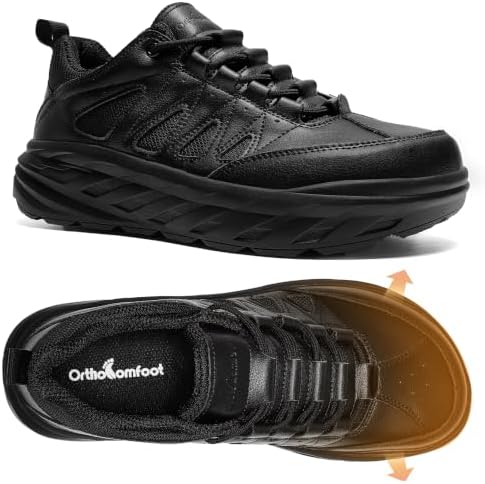
This OrthoComfoot model is a wide-fit, leather sneaker made for walking, work, and casual wear. Its spacious toe area is a notable feature for anyone who finds narrower shoes uncomfortable or needs extra room around the toes. The product description also highlights built-in arch support and a thick, shock-absorbing outsole.
The leather upper and soft lining give it a more structured, everyday look than a lightweight mesh running shoe. That may suit people who want one pair for errands or long periods of standing. The trade-off is that the listing does not describe it as a tennis-court shoe, so it is not the clearest choice for quick side-to-side movement or competitive play.
For neuropathy, the roomy shape and cushioning may be useful starting points, but fit still matters: a wide toe box does not ensure the shoe fits your heel or midfoot correctly. Check for rubbing and pressure after each wear, especially if reduced sensation makes discomfort harder to feel.
Pros:
- Spacious toe area designed for wider or sensitive feet
- Built-in arch support and a cushioned outsole
- Leather upper suits everyday and work wear
Cons:
- Not described as a tennis or court-specific shoe
- Leather may feel less airy than a mesh athletic upper
Verdict: Choose this pair for roomy everyday walking comfort, not for tennis if you need confirmed court-specific support.
2. Men’s Orthopedic Tennis Sneakers with Arch Support and Tread

This men’s athletic sneaker is the most explicitly tennis-oriented option in the group: its product description lists tennis alongside running, gym workouts, and walking. It combines a firm arch-support structure with a cushioned midsole, a breathable mesh upper, and a rubber outsole with multi-directional tread.
The tread and athletic design may make it a more relevant starting point for court use than the leather walking sneaker above. Still, the listing does not provide details about court-specific features such as a tennis outsole pattern or the level of side-to-side stability. If you plan to play, check the fit and grip carefully on the court before using it for demanding movement.
The mesh upper may appeal if you prefer a lighter, more ventilated feel. On the other hand, the description emphasizes firm arch support, which will not suit every foot. If you use custom orthotics, confirm that the insole can be removed or that there is enough interior room; the supplied details do not specify either point.
Pros:
- Product description specifically includes tennis among its uses
- Multi-directional rubber tread and cushioned midsole
- Breathable mesh upper
Cons:
- Does not detail court-specific stability or outsole design
- Firm arch support may not match every person’s needs
Verdict: This is the most sport-focused men’s option here, but verify that its fit and stability work for your court movements before relying on it for tennis.
3. Men’s Orthopedic Sneakers with a Cushioned Heel

This men’s model is described as an orthopedic athletic shoe for walking, running, gym use, work, and casual wear. Its listed features include built-in arch support, cushioned insoles, a supportive heel cup, a breathable mesh upper, and a non-slip outsole. The easy-on design may also be useful if bending or handling laces is difficult.
Compared with the other men’s picks, this shoe puts more emphasis on heel cushioning and convenient on-and-off wear. The description does not provide details about the width, toe-box shape, or whether the insole is removable, so those are important points to confirm if you need extra room or plan to use custom orthotics.
The supplied product data marks this item as unavailable. That status can change, but you may not be able to purchase it when you visit the listing. Its description also does not specifically confirm tennis-court stability, so even if it becomes available, consider it primarily for walking and general athletic use unless the listing provides more court-specific information.
Pros:
- Cushioned insole and supportive heel cup
- Mesh upper and non-slip outsole, according to the description
- Easy-on design may suit people seeking simpler footwear
Cons:
- Marked unavailable in the supplied product data
- Width, removable-insole details, and court stability are not specified
Verdict: Consider this model only if it becomes available and its fit meets your needs; it is not the strongest choice for confirmed tennis-court support.
4. Women’s Wide Orthopedic Slip-On Sneakers

This women’s shoe pairs a wide, roomy fit with a slip-on design and elastic gore panels. The product description says the extra space is intended to accommodate wider feet and custom orthotics, while the easy-on construction may be helpful if tying laces is inconvenient. It also lists arch support, a cushioned insole, and a moisture-wicking lining.
Its fit-focused design may be more useful for everyday walking than for court play. Although the listing calls it a tennis shoe, it does not describe lateral support or a specific tennis outsole. For tennis, those details matter because quick stops and direction changes can place different demands on a shoe than ordinary walking.
Slip-ons can be convenient, but make sure the shoe stays securely in place as you walk. The supplied details do not specify adjustable laces, so there may be less opportunity to fine-tune the fit than with a traditional lace-up shoe. Check whether the shoe works with your orthotics rather than assuming they will fit.
Pros:
- Wide, spacious toe area
- Slip-on design with elastic gore panels
- Description says the interior can accommodate custom orthotics
- Cushioned insole and moisture-wicking lining
Cons:
- Does not specify court-specific traction or lateral support
- Slip-on fit may offer less adjustment than a lace-up shoe
Verdict: This is a promising choice for women who value a roomy slip-on for daily use, but confirm its court stability before playing tennis in it.
5. Women’s Cushioned Orthopedic Athletic Shoes with a Mesh Upper

This women’s athletic shoe is described as a road-running and general sports sneaker, with built-in orthotic arch support, a cushioned midsole, a breathable mesh upper, and a durable outsole. Its product details mention indoor and outdoor activities, including court use, but do not explain how the shoe is designed for tennis-specific side-to-side movement.
The mesh construction may suit people who prefer a more ventilated upper, while the cushioning is intended to soften impact during walking and other activity. The listing says the shoe comes in a range of colors and styles, but it does not provide details about a wide fit, a roomy toe box, or removable insoles. Those omissions matter if you need extra space or use orthotics.
Compared with the women’s slip-on above, this model is more clearly an athletic sneaker, but it offers less stated information about width and orthotic accommodation. Check the sizing and fit details before buying, and make sure the shoe holds your foot securely during direction changes if you plan to play tennis.
Pros:
- Built-in arch support and cushioned midsole
- Breathable mesh upper
- Product description mentions indoor and outdoor activities, including court use
Cons:
- Wide sizing and toe-box dimensions are not specified
- Tennis-specific side support is not described
Verdict: Consider this pair for general athletic use if the fit suits your feet, but look for clearer court-support details if tennis is your main activity.
How to Choose Tennis Shoes for Neuropathy
Start with fit and toe-box room
A shoe should give your toes room to rest naturally without sliding around inside. If you have swelling, bunions, or sensitive toes, look for a shape and width that do not press on those areas. Check the fit while standing, since your feet may take up more space under weight. Do not rely on a shoe label alone: brands and styles can fit differently.
Look for secure support during side-to-side movement
Tennis includes quick stops and lateral steps, so a shoe meant for walking may not provide the support you want on court. Look for clear information about court use, stable construction, and traction. The product details for the shoes in this guide vary: some mention tennis, but not all explain their lateral support or court-specific outsole design. If those features are not clear, ask the seller or choose a model with more complete court-shoe details.
Choose cushioning that feels comfortable, not unstable
Cushioning can make walking and standing feel more comfortable, but extra softness is not automatically better for every person or activity. A shoe should feel steady underfoot and should not make your foot slide inside it. Try it on with the socks you plan to wear, and walk in it before using it for a long session.
Match arch support to your needs
Several shoes here advertise built-in arch support. The right amount depends on your foot and comfort needs, so a firm support structure may feel helpful to one person and uncomfortable to another. If you use custom orthotics, confirm that the shoe has enough room and check whether its original insole can be removed. Ask a podiatrist or other qualified health professional if you are unsure which support is appropriate.
Consider materials, closures, and moisture
Mesh uppers are described as breathable, while leather may offer a more structured everyday feel. A slip-on can be easier to put on, but a lace-up shoe usually gives you more ways to adjust the fit. Whichever style you choose, check that seams or edges do not rub and that the shoe stays secure during movement.
Inspect your feet and introduce shoes gradually
Neuropathy can reduce your ability to notice pressure, heat, or rubbing. Wear new shoes for a short period at first, then check your feet for redness, blisters, or other changes. Stop wearing a shoe that causes a pressure spot, and contact a health professional about wounds, skin changes, or foot-care questions. A supportive shoe is not a substitute for medical care.
Frequently Asked Questions
Can tennis shoes help with neuropathy?
A well-fitting shoe may help reduce rubbing and pressure, but it does not treat neuropathy or restore sensation. Look for a comfortable fit, enough toe room, and support suited to your activity. Talk with a health professional about your individual foot-care needs.
Are walking shoes suitable for playing tennis?
Not always. Walking shoes are generally described for forward movement, while tennis involves quick stops and side-to-side steps. Look for clear information about court use, traction, and lateral stability. Several shoes in this guide are marketed for multiple activities but do not detail all of those court features.
Should I choose a wide shoe if I have neuropathy?
Choose a width that fits your foot without squeezing or allowing excess movement. A wide shoe can help if standard widths put pressure on your toes, but it is not the right fit for everyone. Make sure your heel and midfoot also feel secure.
Can I use custom orthotics with these shoes?
Some product descriptions say they can accommodate orthotics, but not every listing confirms that the insole is removable. Check the product details and make sure there is enough space for your orthotic without making the shoe too tight. A clinician can help you assess fit.
What should I check when trying on shoes with reduced foot sensation?
Check for pressure around the toes, heel, and sides of the foot. Walk in the shoes and confirm that they stay securely in place. Since reduced sensation can make rubbing harder to notice, inspect your feet after each wear for redness, blisters, or skin changes.
Which shoe in this guide is most clearly described for tennis?
The Men’s Orthopedic Tennis Sneakers listing specifically names tennis as one of its uses and describes multi-directional tread. The women’s cushioned model also mentions court use, but gives fewer details about tennis-specific support. In both cases, confirm that the fit and stability feel right for your play.
Final Recommendation
For men seeking an athletic shoe whose description specifically includes tennis, the Men’s Orthopedic Tennis Sneakers are the most direct match, though the listing does not spell out all court-support details. For women who prioritize a roomy fit and easy on-and-off wear, the Women’s Orthopedic Diabetic Wide Tennis Shoes offer the clearest combination of those features. If your main goal is everyday walking rather than court play, the OrthoComfoot wide leather sneaker may be a better fit for that use. Whichever pair you choose, prioritize a secure, pressure-free fit and check your feet regularly.