
Disclosure: As an Amazon Associate I earn from qualifying purchases. Learn more
A tennis serve trainer can help you work on one part of your serve at a time, whether that means learning the swing path, building a steadier rhythm, or practicing a repeatable contact point. The right choice depends on what you need to fix: some tools guide your arm motion, while others let you practice without relying on a consistent ball toss. Here are five options, with a practical look at what each one is designed to do and where its limits are.
Quick Comparison: Best Tennis Serve Trainers
| Trainer | Best for | Training style |
|---|---|---|
| The Total Serve ServeMaster | Learning serve motion and grip | Handheld swing practice |
| OnCourt OffCourt Serve Doctor | Beginners isolating arm movements | Guided motion with an extension pole |
| SCIENSWING Tennis Swing & Serve Trainer | Working on rhythm and fluidity | Retractable tool with click feedback |
| Lamiaraga Wooden Serve Trainer | Solo serve practice | Adjustable wooden practice racket |
| OnCourt OffCourt Tennis Serve Stand | Practicing a repeatable contact point | Adjustable free-standing ball position |
Our Picks: Best Tennis Serve Trainers reviews
1. The Total Serve ServeMaster: Best for Learning the Full Serve Motion

The ServeMaster is a handheld swing trainer designed to help you learn the feel of a tennis serve. Its markings correspond to racket grip positions, with a focus on the continental grip and a natural serving motion. That makes it useful for players who need to connect their grip, arm movement, and swing rhythm before adding the challenge of hitting a ball.
The listed uses go beyond serves: you can also practice ground strokes and overheads, work on toss-arm movement, or use the tool for warm-ups and movement drills. The product description also presents it as a way to feel the motions associated with flat, slice, kick, and topspin serves. Those are movement cues to practice, not a substitute for learning ball contact and placement with a racket and ball.
Compared with the Serve Doctor, the ServeMaster is positioned as a broader swing and coordination tool rather than a trainer focused on isolating a few beginner movements. It is also more compact in concept than a free-standing stand, so it may suit players who want a tool they can take to different practice spaces. The trade-off is that it does not provide a fixed ball or contact point.
Pros:
- Markings help guide continental-grip hand placement.
- Designed for serve, ground-stroke, and overhead swing practice.
- Can be used for toss-arm movement, warm-ups, and coordination drills.
- Intended to help players work on different serve motions.
Cons:
- Does not provide a ball or fixed contact point for impact practice.
- Players still need regular racket-and-ball practice to apply the motion.
Verdict: Choose the ServeMaster if you want one portable tool for rehearsing serve mechanics and other tennis swings, especially if grip and motion are your main priorities.
2. OnCourt OffCourt Serve Doctor: Best for Isolating Beginner Mechanics

The Serve Doctor is a serve-training aid intended for beginners or players reworking an established motion. Its 37-inch design uses a three-part aluminum extension pole and a Velcro system. The stated goal is to help a player focus on movements such as arm extension, lift-off, pronation, and direction.
One useful idea behind this design is reducing the distraction of an inconsistent toss while you learn a swing sequence. That can make it easier to concentrate on a specific arm movement rather than trying to coordinate every part of a live serve at once. It may also be useful in a coached session, where a coach can help you focus on one movement at a time.
Compared with the ServeMaster, this tool is more specifically aimed at beginner mechanics and movement isolation. It is less suited to practicing different tennis swings or developing a full serve with a real ball. The product listing identifies it for beginners, so advanced players looking for detailed ball-contact practice may want a different type of trainer. The supplied product data marks it as unavailable, so check the listing before making plans to buy.
Pros:
- Designed to help beginners learn serve movements in isolation.
- Targets arm extension, lift-off, pronation, and direction.
- Its design aims to reduce interference from an inconsistent toss.
- Uses a three-part aluminum extension pole and Velcro system.
Cons:
- Its stated focus is beginner instruction, not broad swing practice.
- The supplied listing data marks the product as unavailable.
Verdict: The Serve Doctor is worth considering if you are a beginner who needs to break the serve into basic arm movements, provided it is available when you shop.
3. SCIENSWING Tennis Swing & Serve Trainer: Best for Rhythm Practice

The SCIENSWING is described as a retractable tennis swing and serve trainer with click feedback. Its stated purpose is to help players work on rhythm and fluidity. That makes it a possible fit if your main practice goal is a smoother, more consistent swing pattern rather than a fixed contact point or a detailed grip guide.
The click-feedback feature may give you a cue during movement practice, but the available product description does not explain the mechanism, what triggers the sound, or how the trainer is adjusted. For that reason, it is difficult to compare its feedback precisely with the guided motion of the Serve Doctor or the grip markings on the ServeMaster. Check the product listing for current details before buying.
This trainer’s appeal is its narrow focus: rhythm and swing feel. The trade-off is that the supplied details do not establish whether it teaches specific serve positions, supports different serve types, or provides a ball-contact target. Treat it as a supplemental swing-practice tool rather than a complete serve-training system.
Pros:
- Designed for tennis swing and serve practice.
- Retractable design is identified in the product title.
- Click feedback is intended to support rhythm and fluidity work.
- May suit players who want a simple movement cue.
Cons:
- The supplied description offers limited information about operation and adjustment.
- No ball or fixed contact-point practice is described.
Verdict: Consider the SCIENSWING if rhythm is the skill you want to focus on, but compare the listing details carefully if you need more specific mechanical guidance.
4. Lamiaraga Wooden Serve Trainer: Best for Adjustable Solo Repetitions
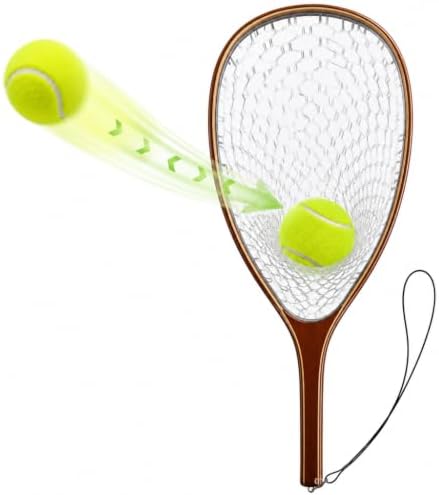
The Lamiaraga is a wooden serve-practice racket designed for solo training. Its product description highlights adjustable settings intended to accommodate different heights and skill levels, along with repeated practice of the arm swing, toss, and contact point. The idea is to provide a guided movement for players who want to rehearse serve mechanics without a partner.
Its adjustable design may be helpful if a fixed setup would not match your body or practice needs. The listed portability also makes it a candidate for use at a court, in a backyard, or in another practice space. However, the supplied description does not give adjustment ranges or explain how the trainer guides the toss and contact point, so check those details before deciding whether it will fit your setup.
Compared with the ServeMaster, this option is described more specifically as an adjustable practice racket for solo serve repetitions. It may be less versatile for other tennis swings, while a stand such as the OnCourt OffCourt model provides a placed ball target rather than the guided practice described here. The supplied product data marks this item as unavailable, so confirm its listing status before relying on it as your choice.
Pros:
- Designed for independent serve practice.
- Adjustable settings are intended to suit different heights and skill levels.
- Focuses on repeating arm swing, toss, and contact-point movements.
- Described as lightweight and portable for different practice spaces.
Cons:
- The supplied details do not specify adjustment ranges or setup instructions.
- The supplied listing data marks the product as unavailable.
Verdict: The Lamiaraga may suit players seeking adjustable, partner-free serve repetitions, but verify both its availability and its fit for your height before choosing it.
5. OnCourt OffCourt Tennis Serve Stand: Best for a Repeatable Contact Point

The OnCourt OffCourt Tennis Serve Stand is a free-standing training aid that positions a ball at an adjustable height and location. By setting a repeatable target, you can focus on your swing path, timing, and contact position without first making a consistent toss. It is designed for solo practice or coached sessions.
This approach is different from a handheld swing trainer: instead of guiding your arm, the stand gives you a stationary target to approach with your swing. You can adjust the ball’s height and position to work toward a contact point that fits your serve. The product is recommended for players 6’2" and under, so taller players should take that stated limit into account.
The stand is described as portable and quick to assemble, with no court setup required. Still, it does not replace live serving: a fixed ball position cannot teach toss control or show how your timing holds up when the ball is moving. The listing says the trainer is intended to help eliminate bad-toss interference, making it most useful as a focused practice step alongside regular serves.
Pros:
- Adjustable ball height and position let you work on a chosen contact point.
- Free-standing design is intended for practice without court setup.
- Lets you focus on swing, timing, and rhythm without a live toss.
- Suitable for solo or coached practice, according to the product description.
Cons:
- The stated recommendation is for players 6’2" and under.
- A stationary target does not provide practice with a live toss.
Verdict: Choose the Serve Stand if you want to repeat a serve swing toward an adjustable contact point, and make sure the stated height recommendation fits you.
How to Choose a Tennis Serve Trainer
Start with the part of your serve you want to improve
Different trainers focus on different parts of the motion. A grip-marked swing tool can help you rehearse hand position and arm movement. A trainer designed to isolate movements can help a beginner focus on a smaller part of the serve. A stand with an adjustable ball can help you repeat a swing toward a chosen contact point. Pick the tool that addresses your current challenge rather than assuming one device will teach every part of the serve.
Decide whether you need a moving cue or a fixed target
Handheld trainers are meant for practicing a motion or rhythm without a live ball. A free-standing trainer gives you a stationary ball position to aim for. The fixed target can remove toss inconsistency while you practice contact mechanics, but it does not train you to toss and hit a moving ball. You may find that a swing trainer and regular court practice serve different purposes.
Check the fit and adjustment options
Look for clear information about length, height range, and how the trainer adjusts. The Serve Doctor is listed as 37 inches long, while the Serve Stand is recommended for players 6’2" and under. The Lamiaraga description says it adjusts for different heights but does not specify the range. If fit is important, check the product listing for details before ordering.
Consider where you will practice
If you want to practice in different places, portability and setup matter. The ServeMaster is described as suitable for the court, backyard, or beach, and the Lamiaraga is described as lightweight and portable. The Serve Stand is free-standing and intended to require no court setup. Compare those descriptions with your available practice space, especially if you plan to use a trainer at home.
Match the trainer to your experience level
The Serve Doctor is specifically described as a beginner aid for learning or reworking serve movements. The ServeMaster covers a wider range of tennis swings and serve motions. The Serve Stand is described for beginners through advanced players, but its usefulness still depends on whether you want to work on a fixed contact point. Choose a tool that helps you practice with focus, not one that adds steps you do not need.
Plan to practice with a racket and ball, too
Serve trainers can make it easier to isolate mechanics, but most do not reproduce a complete serve under normal playing conditions. You will still need to work on your toss, timing, ball contact, and placement with a racket and ball. Use the trainer as a supplement, then carry the movement into regular serving practice.
Frequently Asked Questions
What is a tennis serve trainer used for?
A serve trainer helps you practice a specific part of serving, such as grip, arm movement, rhythm, or contact position. Different designs focus on different skills, so check what each tool is intended to help you rehearse.
Which type of serve trainer is best for beginners?
A beginner may benefit from a tool that breaks the motion into smaller parts. The Serve Doctor is specifically described as an aid for beginners learning serve movements or reworking muscle memory. A coach can also help you decide which movement to focus on.
Can a serve trainer help with an inconsistent toss?
Some tools are designed to reduce the effect of an inconsistent toss during practice. The Serve Doctor is described as minimizing toss interference, while the Serve Stand lets you practice toward a stationary ball position. Neither approach replaces learning to toss consistently during a live serve.
Can I use a serve trainer without a partner?
Several of these products are intended for solo practice. The Lamiaraga is described for independent training, and the Serve Stand is designed for solo or coached sessions. Handheld trainers can also be used to rehearse movements on your own.
Does a serve trainer replace practicing with a racket and ball?
No. A trainer can help you focus on movement or a repeatable target, but regular racket-and-ball practice is still needed to work on the toss, timing, contact, and serve placement.
Which trainer is best for practicing a fixed contact point?
The OnCourt OffCourt Tennis Serve Stand is the clearest fit for this goal because its ball height and position are adjustable. Its stated height recommendation is for players 6’2" and under.
Final Recommendation
The Total Serve ServeMaster is the most versatile pick in this group for players who want to rehearse serve mechanics, grip, and other tennis swings with one handheld tool. If your main goal is a repeatable contact point, the OnCourt OffCourt Tennis Serve Stand offers a more direct approach. Beginners who want to isolate basic movements may prefer the Serve Doctor, while the SCIENSWING is aimed at rhythm practice and the Lamiaraga at adjustable solo repetitions. Compare each trainer’s focus and fit with your own needs, and pair it with regular serving practice using a racket and ball.