
Disclosure: As an Amazon Associate I earn from qualifying purchases. Learn more
Choosing a lightweight tennis racket for a child is about more than finding the lowest weight. The racket should be short enough to swing comfortably, have a grip that fits small hands, and offer enough forgiveness for a new player to make contact. These five junior options range from compact starter rackets to 25-inch frames for older kids, with a mix of pre-strung models and a racket set with a carry bag.
Use age and height as starting points, then consider your child’s comfort and experience. The size guidance provided for some models can help narrow the field, but children grow at different rates.
Quick Comparison: Best Lightweight Kids Tennis Rackets
| Racket | Length | Weight | Standout feature | Best for |
|---|---|---|---|---|
| HEAD Speed 25 Junior | 25 in | 240 g (8.5 oz) | Pre-strung, 105 in² head | Kids ages 8–10, listed height 50–55 in |
| Wilson US Open Jr 21 | 21 in | Not specified | Aluminum frame, 16×18 string pattern | Young beginners seeking a compact starter racket |
| HEAD Instinct 21 Junior | 21 in | Not specified | Pre-strung, head-light balance | New players ages 4+ and 40–44 in tall |
| AboveGenius 23-inch Kids Tennis Racket Set | 23 in | 8.2 oz | 90 in² head and kid-sized bag | Kids ages 6–8 looking for a racket-and-bag option |
| HEAD Speed Junior 23 | 23 in | 215 g (7.6 oz) | Pre-strung, 98 in² head | Kids ages 6–8, listed height 45–49 in |
Our Picks: Best Lightweight Kids Tennis Rackets reviews
1. HEAD Speed 25 Junior: A Forgiving Pre-Strung Racket for Older Kids
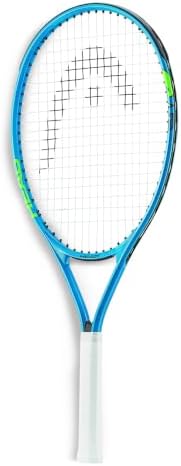
The HEAD Speed 25 is a 25-inch junior racket intended for children ages 8–10 who are listed as 50–55 inches tall. It arrives pre-strung, so it is ready to use without arranging a separate stringing job.
Its aluminum O-beam frame is built for regular learning and casual play. The 105-square-inch head provides a larger target area than the 98-square-inch head on the 23-inch HEAD Speed, which may help a developing player make contact more consistently. The tradeoff is weight: at 240 grams, this is the heaviest racket in this group with a listed weight.
The 3 7/8-inch grip is a useful detail to check before buying. A 25-inch racket can be a sensible next step for a child who has outgrown a shorter frame, but its size and weight may be harder to manage for a smaller or less coordinated player. Compare the racket’s fit with your child’s height and ability rather than relying on age alone.
Pros:
- Pre-strung and ready to play
- Large 105-square-inch head offers a forgiving hitting area
- Aluminum O-beam frame is designed for durability
- Includes a specified 3 7/8-inch grip size
Cons:
- At 8.5 ounces, it is heavier than the other rackets here with listed weights
- Its 25-inch length may be too large for a smaller child
Verdict: Choose the HEAD Speed 25 if your child fits the listed height range and is ready for a full-size junior frame with a generous hitting area.
2. Wilson US Open Jr 21: A Compact Starter Racket

This 21-inch Wilson racket is a compact option for a child beginning to learn the basic feel of tennis. Its US Open-inspired design gives it a distinct look, while the aluminum AirLite Alloy frame is described as combining durability with lightweight strength.
The listed 16×18 string pattern is relatively open compared with denser patterns, but string pattern alone does not tell you how a racket will feel in a child’s hands. The supplied product details do not state the racket’s weight, grip size, recommended age or height, or whether it comes pre-strung. If those details matter to your decision, check the listing before ordering.
Compared with the HEAD Instinct 21, the Wilson has less supplied information about fit and setup. Its short length may make it worth considering for a young beginner, but parents will need to confirm that it is suitable for the child’s size and ready-to-play needs.
Pros:
- Compact 21-inch length
- Aluminum AirLite Alloy construction
- 16×18 string pattern is specified
Cons:
- Weight and grip size are not specified in the supplied details
- Pre-strung status and age or height guidance are not specified
Verdict: Consider the Wilson US Open Jr 21 if you want a short aluminum starter racket and can verify the fit and setup details before buying.
3. HEAD Instinct 21 Junior: An Easy-to-Handle Choice for Young Beginners

The HEAD Instinct 21 is designed for young children starting out in tennis. The listed 21-inch version is recommended for ages 4 and up and children 40–44 inches tall. It comes pre-strung, which removes one setup step before a first practice.
Its head-light balance is intended to support maneuverability and control, while the aluminum O-beam frame is made to hold up through regular practice and play. The product details also list a 3 5/8-inch grip, giving parents a concrete measurement to compare with their child’s hand.
The Instinct range is described as available in 21-, 23-, and 25-inch sizes, with the longer versions aimed at taller, older children. That size range is helpful if you want to stay with the same series as your child grows, though the racket size should still match the child’s current reach and swing. Weight is not specified for this 21-inch model in the supplied details, so it is not possible to compare its weight directly with the rackets that include a measurement.
Pros:
- Pre-strung for straightforward setup
- Head-light balance is designed for maneuverability and control
- 21-inch size has specific age and height guidance
- Grip size and durable aluminum construction are specified
Cons:
- Weight is not specified in the supplied details
- The 21-inch size may be outgrown sooner than a longer junior racket
Verdict: The HEAD Instinct 21 is a practical pick for a young beginner who fits the listed size guidance and would benefit from a pre-strung, short racket.
4. AboveGenius 23-Inch Set: A Lightweight Racket with a Carry Bag

The AboveGenius set pairs a 23-inch aluminum alloy racket with a kid-sized carry bag. The racket weighs 8.2 ounces and has a slim grip with a cushioned overgrip, according to the product details. Those features make it an option to consider for a child who wants a manageable-length frame and a place to carry gear.
The 90-square-inch head is smaller than the 98-square-inch head on the HEAD Speed 23, so it offers a smaller listed hitting area. The product description also highlights nylon strings and a triangle frame designed to reduce vibration. These are manufacturer-stated features; the supplied details do not give a tested measurement for vibration reduction.
The bag is described as having separate pockets for the racket and tennis balls, which can help keep equipment organized. The product information does not clearly confirm whether balls are included, so check the listing if you expect them to come with the set. The listing title suggests ages 6–8, but the supplied description does not provide a height range or grip measurement.
Pros:
- Listed weight of 8.2 ounces and 23-inch length
- Aluminum alloy frame and cushioned overgrip
- 90-square-inch head and nylon strings are specified
- Includes a kid-sized bag with separate storage areas described
Cons:
- Grip size and recommended height are not specified in the supplied details
- The smaller head is not as large as the HEAD Speed 23’s listed 98-square-inch head
Verdict: Choose the AboveGenius set if a lightweight 23-inch racket and a compact carry bag are priorities, and confirm what accessories are included before ordering.
5. HEAD Speed Junior 23: A Light, Pre-Strung Option for Ages 6–8

The HEAD Speed Junior 23 is a 23-inch aluminum racket aimed at children ages 6–8 who are listed as 45–49 inches tall. At 215 grams, or 7.6 ounces, it has the lowest specified weight among these five choices. It also arrives pre-strung, so it can be used without a separate stringing setup.
The racket has a 98-square-inch head and a 3 3/4-inch grip. Those measurements make it easier to compare with the 25-inch HEAD Speed, which is longer, heavier, and has a larger head. The Speed 23 may suit a child who fits its size range but is not yet ready for a 25-inch frame.
The aluminum O-beam construction is designed for durability as children learn and practice. One practical caveat is that the supplied product information lists this model as unavailable. Availability can change, so check the product page; if you need a racket now, the HEAD Instinct 21 or AboveGenius 23 may be alternatives to compare based on your child’s size.
Pros:
- Light 7.6-ounce listed weight
- Pre-strung and ready to use
- 98-square-inch head and 3 3/4-inch grip are specified
- Clear age and height guidance
Cons:
- Supplied product information lists it as unavailable
- May be outgrown as a child moves to a longer frame
Verdict: If it is available and your child fits the listed range, the HEAD Speed 23 is a strong choice for a light, pre-strung junior racket.
How to Choose a Lightweight Kids Tennis Racket
Match the racket length to your child
Length affects how easily a child can control the racket and reach the ball. The options here range from 21 to 25 inches, with the product details giving specific age and height guidance for several models. Use those measurements as a starting point, not a strict rule. A racket that is too long can be awkward to swing, while one that is too short may not suit a growing player for long.
Consider weight along with size
A lighter racket can be easier for a child to move, but weight should be considered alongside length, balance, and grip fit. Among these picks, the HEAD Speed Junior 23 is listed at 7.6 ounces, the AboveGenius at 8.2 ounces, and the HEAD Speed 25 at 8.5 ounces. The Wilson and HEAD Instinct 21 listings do not provide a weight in the supplied details, so compare their current product information if weight is a deciding factor.
Check grip size and comfort
A grip that is too large or too small can make it harder for a child to hold the racket securely. The HEAD Speed 25 lists a 3 7/8-inch grip, the HEAD Speed 23 lists 3 3/4 inches, and the HEAD Instinct 21 lists 3 5/8 inches. Grip size is not specified for the other two options in the supplied details. If possible, have your child hold the racket before buying, or verify the grip measurement on the product page.
Look at the head size and sweet spot
A larger head gives a child more area to make contact with the ball. The HEAD Speed 25 has a listed 105-square-inch head, compared with 98 square inches for the HEAD Speed 23 and 90 square inches for the AboveGenius. A larger head can be helpful for learning, while a smaller one may be a better fit for a player who is ready for more precise contact. The Wilson and HEAD Instinct product details provided here do not list head size.
Check whether the racket comes pre-strung
Pre-strung rackets can simplify setup, especially for a first racket. The two HEAD Speed models and HEAD Instinct 21 are listed as pre-strung. The supplied details for the Wilson do not say whether it is pre-strung. The AboveGenius description mentions nylon strings but does not clearly state whether the racket arrives strung, so confirm the current listing if you are unsure.
Think about how your child will use and carry it
For occasional lessons or play at a park, a simple pre-strung racket may be all your child needs. If carrying equipment is a concern, the AboveGenius set includes a kid-sized bag with separate storage areas described for the racket and tennis balls. Check the listing to confirm which accessories are included. For regular use, also consider whether the racket’s construction and fit will suit your child as they practice and grow.
Frequently Asked Questions
What size tennis racket should I get for my child?
Start with your child’s height and the manufacturer’s size guidance, then consider how comfortably they can swing the racket. The products here include 21-, 23-, and 25-inch options. Age can help narrow the choices, but height and handling are important too.
Is a lighter kids’ racket always better?
Not always. A lighter racket may be easier to move, but it still needs to be the right length and grip size for your child. Compare the listed weight with the child’s ability to control the racket comfortably.
Which option is best for a child just starting tennis?
The HEAD Instinct 21 is specifically described for young beginners and is pre-strung, with age and height guidance for the 21-inch size. The Wilson US Open Jr 21 is another compact option, but its supplied details do not specify weight, grip size, or pre-strung status.
Which racket has the lowest listed weight?
The HEAD Speed Junior 23 has the lowest listed weight in this selection at 7.6 ounces. The AboveGenius is listed at 8.2 ounces, and the HEAD Speed 25 at 8.5 ounces. Weight is not provided in the supplied details for the Wilson or HEAD Instinct 21.
Do these rackets come pre-strung?
The HEAD Speed 25, HEAD Instinct 21, and HEAD Speed Junior 23 are described as pre-strung. The supplied Wilson details do not specify this. The AboveGenius description refers to nylon strings but does not clearly confirm its arrival setup, so check the listing.
Is the HEAD Speed 23 available?
The supplied product information lists the HEAD Speed Junior 23 as unavailable. Availability can change, so check the Amazon listing for current status. If it is unavailable, compare another racket that matches your child’s height and preferred length.
Does the AboveGenius set include tennis balls?
The description mentions separate bag pockets for the racket and tennis balls, but it does not clearly confirm that balls are included. Check the product listing to see exactly what comes in the set.
Final Recommendation
For a young beginner, the pre-strung HEAD Instinct 21 stands out for its compact size and clear fit guidance. For a child in the 6–8 age range who fits a 23-inch frame, the HEAD Speed Junior 23 has the lowest listed weight, though the supplied information lists it as unavailable. Older or taller kids may be better suited to the HEAD Speed 25, while the AboveGenius set is worth considering if a carry bag is useful. Before you choose, compare your child’s height, grip fit, and ability to swing the racket with the product’s listed measurements.