
Disclosure: As an Amazon Associate I earn from qualifying purchases. Learn more
Choosing a tennis racket for a junior tournament player starts with fit: the frame should be easy for your child to swing and long enough to support developing strokes without feeling unwieldy. The options here range from compact 21-inch starter rackets to 25-inch models for taller juniors. Some are aimed more at learning than competition, so match the racket to your player’s height, strength, and current level rather than choosing by name alone.
Quick Comparison
| Racket | Length | Best suited for | Standout feature |
|---|---|---|---|
| HEAD Speed 25 Junior Tennis Racquet | 25 in | Players ages 8–10, listed for 50–55 in height | 105 sq in head and 240 g frame |
| Wilson US Open Jr 21 Tennis Racket | 21 in | Young beginners | Aluminum frame and 16×18 string pattern |
| Wilson Pro Staff Precision Junior 21 | 21 in | Players ages 5–6 | Perimeter weighting for added stability |
| Dunlop Nitro 23-Inch Junior | 23 in | Developing junior players | Designed for skill development and practice |
| Babolat Aero Junior 25 Inch | 25 in | Players 51–55 in tall | Graphite composite construction and 16×17 pattern |
Our Picks: Best Kids Tennis Rackets for Tournament Juniors reviews
HEAD Speed 25: A Forgiving Frame for Taller Juniors
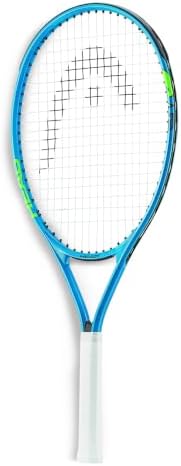
The HEAD Speed 25 is a pre-strung aluminum junior racket with a 25-inch length and a 105-square-inch head. Its larger head gives developing players a generous target area for contact, while the listed 240 g frame weight offers more substance than an especially light starter racket.
HEAD lists this model for children ages 8–10 who are 50–55 inches tall. It also has a 3 7/8-inch grip, a size intended for smaller hands. These measurements make it a sensible option for a junior who has outgrown a shorter racket but is not ready for an adult-length frame.
Its aluminum construction prioritizes durability and accessible handling over the more specialized feel a competitive player may want as technique advances. It is positioned for learning and casual play, so tournament-focused juniors should consider whether its weight and frame response suit their current level before choosing it as a match racket.
Pros:
- Pre-strung and ready to use
- Large 105-square-inch head offers a forgiving hitting area
- Listed height and age guidance makes sizing easier
- Aluminum frame is designed for durability
Cons:
- Designed for learning and casual play rather than advanced competition
- The 240 g frame may feel substantial to a smaller or less-strong junior
Verdict: Choose the HEAD Speed 25 if your junior fits its sizing range and needs a durable, forgiving step-up racket for lessons and early match play.
Wilson US Open Jr 21: A Simple First Racket for Young Players

The Wilson US Open Jr 21 is a 21-inch starter racket with an aluminum AirLite Alloy frame and a 16×18 string pattern. Its shorter length is intended for small players who are learning to hold, swing, and make contact with a tennis ball.
For a young beginner, a compact frame can be easier to manage than a longer junior racket. The US Open theme adds visual appeal, but the practical choice comes down to fit and ease of use. The supplied details describe it as a starter racket, not a performance model for an older tournament player.
That distinction matters if your child is already playing regular matches. A 21-inch frame may be too short for a junior who has grown into a 23- or 25-inch racket. Check the player’s height and comfort with the length before buying, especially if this will be used for more than early lessons.
Pros:
- Compact 21-inch length for young players
- Aluminum frame is designed to balance strength and lightness
- 16×18 string pattern
Cons:
- Starter design may not suit an experienced tournament junior
- Supplied details do not include a weight or age range
Verdict: The Wilson US Open Jr 21 is best for a young beginner who needs a short, straightforward racket, not a growing player who has already moved into longer frames.
Wilson Pro Staff Precision Junior 21: Stability for Ages Five to Six

The Wilson Pro Staff Precision Junior 21 is a pre-strung, 21-inch racket listed for ages 5–6. Its AirLite Alloy frame is designed to combine durability with lightweight strength, while C Beam Technology is intended to add stability and power through the beam design.
It also has a Perimeter Weighting System that places added frame volume at the 3 and 9 o’clock positions. The design aims to improve torsional stability and balance through the swing, which may be useful for a young player still learning to make consistent contact. The product details do not provide a racket weight, so your child’s comfort with the frame is worth checking in person if possible.
Despite its Pro Staff-inspired styling, this is a short junior model for very young players. It is not the right size for most older tournament juniors, but it can make sense for a young player starting structured lessons and needing a pre-strung racket.
Pros:
- Pre-strung for convenient setup
- Listed age range helps narrow down fit
- Perimeter weighting is designed to support stability
- Aluminum construction is intended to be durable
Cons:
- 21-inch length is limited to younger, smaller players
- Weight is not provided in the supplied product details
Verdict: Consider the Pro Staff Precision Junior 21 for a five- or six-year-old beginner; look at a longer racket for an older or taller tournament player.
Dunlop Nitro 23-Inch: A Middle Size for Skill Building

The Dunlop Nitro is a strung 23-inch junior racket described as a tool for learning swing mechanics and court fundamentals. Its length sits between the 21-inch Wilson models and the two 25-inch options in this guide, making it a possible fit for a player who has outgrown a shorter frame but is not ready for a longer one.
Dunlop emphasizes a lightweight design, stable contact, and comfort during longer practice sessions. Those aims make the Nitro sound suited to lessons, camps, and developing players who need a manageable racket for regular practice. The supplied details do not include a weight, head size, or specific age and height guidance, so sizing it against the child’s actual reach and swing is especially important.
The provided product information marks this listing as unavailable. That makes it difficult to recommend as an immediate purchase, even though its 23-inch size may fill a useful gap. Check the listing before making it part of your shortlist.
Pros:
- 23-inch length offers an in-between option
- Strung and described as suitable for lessons, camps, and practice
- Designed to support developing swing mechanics
Cons:
- The provided listing status is unavailable
- Weight, head size, and age guidance are not supplied
Verdict: The Dunlop Nitro could suit a developing player who needs a 23-inch racket, but confirm that it is available and that the fit is right before choosing it.
Babolat Aero Junior 25: A More Performance-Oriented Step-Up

The Babolat Aero Junior 25 is designed for young players between 51 and 55 inches tall. It pairs a graphite-composite construction with an aluminum head and has a 100-square-inch head, a 25-inch length, and a listed strung weight of 8.5 ounces.
Its 16×17 string pattern is intended to help young players explore spin, while the two-points-head-light balance is designed to support maneuverability. Compared with the aluminum HEAD Speed 25, the Babolat offers a more performance-focused mix of materials and features. Its product information also gives more detail about balance and string pattern, which can help families compare options as a junior’s game develops.
The 25-inch length and stated height range make fit the key consideration. A junior who is shorter or still learning basic swings may find a smaller racket easier to control. While the product description highlights junior-friendly handling, it does not provide a grip size, so check that the handle feels secure in your child’s hand.
Pros:
- Graphite-composite construction with an aluminum head
- 16×17 string pattern is designed to help players try spin
- Product details include head size, strung weight, and balance
- Listed for juniors 51–55 inches tall
Cons:
- 25-inch length may be too large for a shorter junior
- Grip size is not included in the supplied product details
Verdict: The Babolat Aero Junior 25 is the strongest fit in this group for a taller junior seeking a more performance-oriented frame, provided the racket’s length and handle feel comfortable.
How to Choose a Kids Tennis Racket for Tournament Play
Start with the right racket length
Length affects how easily a junior can swing, reach the ball, and control the racket through contact. The options here range from 21 to 25 inches. A 21-inch racket is aimed at very young players, while 23-inch and 25-inch frames offer steps up in reach. Use the product’s age or height guidance when provided, but also consider your child’s comfort during a full swing.
Match the racket to your child’s strength and stage
A racket that feels too heavy can make it harder to swing smoothly, while one that is too short may limit a player who has grown. The HEAD Speed 25 and Babolat Aero Junior 25 both list a strung weight of 8.5 ounces, but their construction and design details differ. The Wilson 21-inch models and Dunlop Nitro do not include a weight in the supplied information, so do not assume they weigh the same.
Consider head size and forgiveness
A larger head can offer a wider area for making contact, which may be helpful while a junior is developing consistency. The HEAD Speed 25 lists a 105-square-inch head, while the Babolat Aero Junior 25 lists a 100-square-inch head. The supplied details do not give head sizes for the other models, so compare the available specifications rather than guessing.
Look at materials and intended use
Aluminum appears in several of these rackets and is positioned as a durable, accessible option for young players. The Babolat uses graphite-composite construction with an aluminum head and includes more performance-oriented details, such as its balance and string pattern. A tournament player who practices often may want to weigh these design differences against the child’s current skill and comfort.
Check the grip and handling
A child should be able to hold the handle securely without squeezing too hard. The HEAD Speed 25 lists a 3 7/8-inch grip, but grip information is not provided for every model. If possible, have your junior hold a racket before buying. A good fit should feel manageable during a swing, not just comfortable when standing still.
Separate a starter racket from a match-ready choice
Several options here are described as starter rackets or tools for learning fundamentals. That can be right for a junior who is new to tennis, but a more experienced player may need a frame that better matches their technique, strength, and regular practice. Do not assume that a tournament-themed design or a performance-inspired name alone makes a racket the right fit for competitive play.
Confirm availability and setup
Check whether the racket is available and whether it comes strung before ordering. The supplied descriptions identify the HEAD Speed, Wilson Pro Staff Precision, and Dunlop Nitro as pre-strung or strung. The Wilson US Open and Babolat descriptions do not clearly state whether they come strung. The Dunlop listing is marked unavailable in the provided product information, so its status should be confirmed before you plan to buy it.
Frequently Asked Questions
What size tennis racket should a junior tournament player use?
Choose based on the player’s height, strength, and ability to swing with control. The products in this guide range from 21 to 25 inches, with specific height or age guidance provided for some models. A racket should feel manageable through the full swing, not just look like the right size on paper.
Which racket in this guide is best for a taller junior?
The HEAD Speed 25 and Babolat Aero Junior 25 are both listed for taller children. HEAD gives an age range of 8–10 and a height range of 50–55 inches; Babolat lists a height range of 51–55 inches. Compare their construction, head size, weight, and handle fit before deciding.
Is a 21-inch racket suitable for tournament play?
It can suit a very young player whose size and stage match the racket, but both 21-inch options here are positioned for young beginners. An older or taller tournament junior will likely need a longer frame. Use the child’s fit and playing needs—not the word “junior” alone—to guide the choice.
What is the difference between the HEAD Speed 25 and Babolat Aero Junior 25?
Both are 25-inch rackets with a listed weight of 8.5 ounces, but their designs differ. The HEAD has an aluminum frame, a 105-square-inch head, and a listed 3 7/8-inch grip. The Babolat has graphite-composite construction with an aluminum head, a 100-square-inch head, and a 16×17 string pattern.
Do these rackets come pre-strung?
The product details say the HEAD Speed 25 and Wilson Pro Staff Precision Junior 21 are pre-strung, and the Dunlop Nitro is described as strung. The supplied descriptions do not clearly confirm stringing for the Wilson US Open Jr 21 or Babolat Aero Junior 25, so check each listing before ordering.
Is the Dunlop Nitro available?
The provided product information marks the Dunlop Nitro listing as unavailable. Availability can change, so confirm the listing status before considering it as a purchase option.
Final Recommendation
For a taller junior who is developing a competitive game, the Babolat Aero Junior 25 offers the most detailed performance-oriented specifications in this group. The HEAD Speed 25 is a practical alternative for a child who fits its listed size range and wants a forgiving aluminum frame. The shorter Wilson rackets are better suited to very young beginners, while the Dunlop Nitro may be worth considering only if it becomes available and its 23-inch length fits your player. In every case, prioritize a racket your child can swing comfortably and control consistently.