
Disclosure: As an Amazon Associate I earn from qualifying purchases. Learn more
Heel grips can help tennis shoes feel more secure when your heel lifts or rubs, especially if the shoes are slightly loose. The right choice depends on the shoe’s inner lining: cushioned fabric-style pads suit many sneakers, while clear silicone grips need a smooth surface to stick well. Below, we compare five options by their materials, fit, adhesive, and practical limitations so you can choose a grip that matches your shoes.
Quick Comparison
| Product | Standout feature | Best suited for | Pack size |
|---|---|---|---|
| EIRMAT Heel Pads | Soft, contoured, non-slip design | Tennis shoes and other sneaker styles | 4 pairs |
| Dr.Foot Heel Grips | Foam cushion with microsuede surface | Sneakers and shoes that rub or slip | Pack details not specified |
| MATIE FIX Heel Liners | Breathable suede material | Slightly roomy shoes | 4 pairs |
| VEACAN Heel Cushion Pads | Contoured memory foam with side wings | Extra cushioning and a closer heel fit | 6 pairs |
| IWELA WATER Clear Silicone Heel Grips | Thin, transparent silicone | Shoes with a smooth heel lining | 2 pairs |
Our Picks: Best Heel Grips for Tennis Shoes reviews
1. EIRMAT Heel Pads: A Versatile Pick for Tennis Shoes

EIRMAT’s heel pads are shaped to follow the curve of the heel and use a soft, stretchy material for cushioning. The product description specifically lists tennis shoes, running shoes, and sneakers among the styles they can fit, making these a practical option to consider for athletic footwear.
The pads have adhesive backing and a non-slip surface intended to help keep the heel in place. Their contoured design may suit you if your main issue is minor heel movement or rubbing at the back of a shoe. The four-pair pack also gives you pads for more than one pair of shoes.
As with any adhesive insert, a clean, dry shoe interior should help with placement. EIRMAT notes that the adhesive can be difficult to remove; it suggests warming the pad with a hair dryer if needed. That strong hold may be useful for keeping the pad in place, but it also means you should position it carefully before pressing it down.
Pros:
- Described as suitable for tennis shoes and sneakers
- Contoured shape and soft, stretchy cushioning
- Non-slip surface is designed to help reduce heel movement
- Includes four pairs
Cons:
- Strong adhesive may make repositioning or removal difficult
- Placement requires care to avoid attaching the pad crookedly
Verdict: Choose EIRMAT if you want a cushioned, contoured grip that is explicitly intended for tennis shoes and you are comfortable taking care during installation.
2. Dr.Foot Heel Grips: Foam Cushioning with a Microsuede Finish

Dr.Foot combines a foam cushion with a microsuede top layer. The ergonomic shape is intended to sit against the heel and provide a softer barrier where the shoe may rub. The brand lists sneakers and running shoes among the compatible footwear, as well as boots and dress shoes.
The listed size is 3.3 inches long by 1.4 inches wide, useful details to check against the heel area inside your shoe. The self-adhesive backing is designed to keep the pad in place. Compared with a thin, clear grip, this style gives cushioning more prominence, so it may appeal if comfort and friction reduction matter more to you than an invisible look.
One practical consideration is that any pad takes up some room inside the shoe. The product description says the design is intended to avoid crowding, but a snug tennis shoe may still feel tighter once a cushion is added. If your shoe already fits closely around the heel, check its interior space before applying a pad.
Pros:
- Foam cushioning with a microsuede contact surface
- Designed for sneakers and running shoes as well as other footwear
- Contoured shape intended to help hold the heel in place
- Listed dimensions make it easier to check fit before use
Cons:
- Cushion thickness may feel crowded in a close-fitting shoe
- Pack quantity is not specified in the supplied product details
Verdict: Dr.Foot is a good option to consider if you want a soft, fabric-topped cushion for a sneaker and have enough room at the back of the shoe.
3. MATIE FIX Heel Liners: A Simple Suede Option for Roomy Shoes
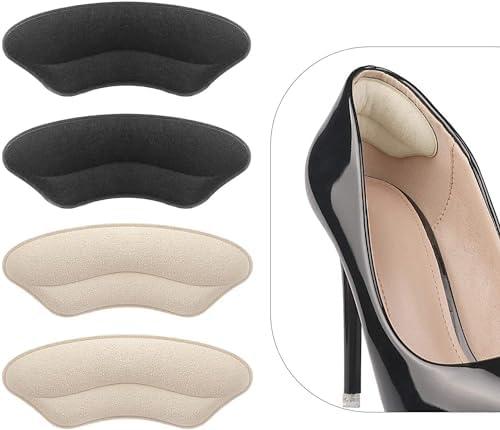
MATIE FIX heel liners use suede material and have self-adhesive backs. The simple liner style is designed to fill some of the extra space in a slightly oversized shoe and cushion the heel. The product information lists a range of footwear, though it does not specifically name tennis shoes.
The four-pair pack can be useful if you want to adjust more than one pair of shoes. Its straightforward peel-and-stick design is easy to understand: remove the backing, position the liner inside the heel, and press it into place. The suede surface may suit people who prefer a fabric feel over a smooth silicone or gel-style insert.
These are a relatively basic option compared with the more shaped designs in this group. The supplied details do not give dimensions or describe extra features such as side wings or a pressure-relief channel. For tennis shoes, check that the liner covers the area where your heel rubs and that it does not interfere with the shoe’s fit.
Pros:
- Suede material is described as breathable and cushioned
- Self-adhesive backing makes application straightforward
- Four pairs are included
- Designed for new or slightly oversized shoes
Cons:
- Tennis shoes are not specifically named in the product details
- Dimensions and added contour features are not provided
Verdict: Consider MATIE FIX if you want a basic suede heel liner for a shoe that is only slightly roomy and do not need a highly contoured design.
4. VEACAN Heel Cushion Pads: Contoured Memory Foam in a Multi-Pair Set

VEACAN’s pads use memory foam with a soft faux-suede surface. Their contoured shape includes cushioned side wings and a center channel, features intended to follow the heel’s shape while relieving pressure. This design offers more structure than a flat heel liner.
The set includes three black pairs and three beige pairs, giving you a choice of color for different shoe interiors. The product description lists casual shoes among the suitable styles, but it does not specifically mention tennis shoes. For athletic footwear, check that the pad’s shape and added cushioning will fit without making the heel area feel too tight.
VEACAN recommends applying the pads to a clean, dry, smooth surface and pressing them firmly for 30 seconds. It also notes that adhesion can vary with the shoe lining and advises checking an inconspicuous area first for delicate materials. That guidance matters for tennis shoes, which may have different linings and textures inside the heel.
Pros:
- Contoured memory-foam design with side wings and a center channel
- Faux-suede surface provides a soft barrier against rubbing
- Six pairs in black and beige
- Clear application guidance, including a surface check for delicate shoes
Cons:
- Tennis shoes are not specifically listed among the suitable styles
- Adhesion may vary with the shoe lining and surface condition
Verdict: VEACAN is worth considering if you want more contour and cushioning, provided the inside heel of your tennis shoes offers a suitable surface and enough room.
5. IWELA WATER Clear Silicone Heel Grips: A Low-Profile Choice for Smooth Linings

These transparent heel grips are made of flexible silicone and have a thin, low-profile shape. The smooth, tapered edges are designed to create a discreet barrier between the heel and shoe. Unlike the foam and suede options above, this pair is intended for smooth inner surfaces rather than textured fabric.
The product information specifically warns against using the grips on mesh, fabric, open-weave materials, suede, or nubuck because the adhesive may not bond securely. It says they may work in athletic shoes if the heel counter is smooth synthetic material. That makes checking the inside of your tennis shoes especially important before choosing this option.
The package includes two pairs, and the grips are described as washable by rinsing with clean water and air-drying if they become dirty or loose. The instructions call for cleaning and drying the shoe surface, pressing the grip firmly, and allowing time for the adhesive to set before extended wear. These steps are helpful, but the smooth-surface limitation rules them out for many fabric-lined tennis shoes.
Pros:
- Thin, transparent silicone design
- Flexible material with smooth tapered edges
- Can be rinsed and air-dried if dirty or loose
- May suit tennis shoes with a smooth synthetic heel lining
Cons:
- Not recommended for mesh, fabric, or porous sneaker linings
- Requires a clean, smooth surface for the adhesive to bond
Verdict: Choose IWELA WATER only if your tennis shoes have a smooth synthetic heel surface; for mesh or fabric linings, a cushioned fabric-style pad is a safer match.
How to Choose Heel Grips for Tennis Shoes
Match the Grip to Your Shoe’s Inner Lining
Start by checking the material inside the heel of your tennis shoes. A fabric, mesh, or textured lining may be a better match for a cushioned pad designed for sneakers. Clear silicone grips need a smooth surface to adhere well, so they are a less suitable choice for porous or open-weave materials. When the product instructions warn against certain linings, follow that guidance.
Choose a Shape That Addresses Your Main Problem
If your heel lifts because the shoe is slightly roomy, a contoured pad can help take up space at the back. If rubbing is the main concern, look for a soft surface and cushioning where your heel contacts the shoe. A grip can help with minor slipping, but it is not a substitute for the right shoe size or a proper fit throughout the foot.
Consider Cushion Thickness and Available Space
Heel pads add material inside your shoe. A thicker foam or memory-foam style may provide more cushioning, but it can also make a snug shoe feel tighter. Thin silicone takes up less space, though it has stricter surface requirements. Consider how your shoes fit now and whether there is room for a pad before applying one.
Check Adhesive Instructions and Shoe Condition
Adhesive performance depends on the surface and how it is prepared. Clean and fully dry the heel area before application, and press the grip in place as directed. If the shoe has a delicate lining, check a discreet area first when the product instructions recommend it. Position the pad carefully, since some strong adhesives may be difficult to remove or reposition.
Think About Pack Size and Color
A multi-pair pack may be useful if you plan to use grips in several pairs of shoes or want spares. Color can also matter if the pad will be visible when you take off your shoes. For example, a pack with black and beige options gives you more choice for coordinating with different linings, while a transparent grip is intended to be less noticeable.
Frequently Asked Questions
Can I use heel grips in tennis shoes?
Yes, some heel grips are designed for sneakers or tennis shoes. Check the product’s material guidance and the lining inside your shoe before applying one. For example, clear silicone styles may need a smooth synthetic surface, while some cushioned pads are listed for athletic shoes.
Do heel grips stop heel slipping?
They are designed to help hold the heel more securely and reduce movement in shoes that are slightly loose. Results depend on the shoe’s fit, the grip’s shape, and how well its adhesive bonds to the lining.
Will a heel grip work on mesh tennis shoes?
It depends on the product. The clear silicone option here is not recommended for mesh or fabric linings. Check the instructions for any grip you are considering, and choose a product whose adhesive is suited to your shoe’s inner surface.
Can heel grips make tennis shoes feel tighter?
They can. Any pad takes up some room, and a thicker cushion may be more noticeable in a shoe that already fits closely. If your tennis shoes feel snug around the heel, consider a lower-profile option or reconsider whether an insert is the right solution.
How should I apply adhesive heel grips?
Follow the product’s specific directions. In general, the shoe’s heel area should be clean and dry before application. Position the grip carefully, press it firmly into place, and allow the adhesive to set as instructed before extended wear.
Can I move a heel grip after sticking it down?
Some adhesives may be difficult to remove or reposition, and moving a pad can affect how well it sticks afterward. Take time to line it up before pressing it firmly onto the shoe, and check the product instructions for removal guidance.
Are heel grips a fix for shoes that are much too big?
Heel grips are intended to help with minor looseness or rubbing, not to correct a shoe that is substantially too large or poorly fitted. If the shoe still slips or feels unstable after a small adjustment, a different size or fit may be a better solution.
Final Recommendation
For tennis shoes, EIRMAT is the clearest all-around match in this group because its product details specifically list tennis shoes and describe a contoured, cushioned, non-slip design. Dr.Foot is another option to consider if you prefer foam cushioning with a microsuede surface. If you choose a clear silicone grip, first confirm that your shoe has a smooth synthetic heel lining; it is not intended for mesh or fabric interiors.