
Disclosure: As an Amazon Associate I earn from qualifying purchases. Learn more
If bunions make tennis shoes feel tight across the forefoot, start by looking for a roomy toe box and a fit that does not press on the sore area. The four options below offer varying amounts of toe room and support, but they are not all dedicated court shoes. Check the fit and intended use carefully: a comfortable walking shoe may not provide the stability or traction you want for quick side-to-side tennis movements.
Quick Comparison: Best Men’s Tennis Shoes for Bunions
| Product | Standout feature | Best suited for | Tennis-specific note |
|---|---|---|---|
| BRONAX Men’s Wide Toe Box Road Running Walking Shoes | Wide toe box and removable insole | Walking and casual wear | Running/walking design, not identified as a court shoe |
| OrthoComfoot Men’s Wide Leather Orthopedic Sneakers | Roomy toe area and built-in arch support | Walking, work, and everyday wear | Listed for light outdoor activity, not dedicated tennis |
| Extrun Men’s Orthopedic Wide Toe Box Barefoot Shoes | Wide toe box and zero-drop design | Walking, gym sessions, and casual use | Not specified as a tennis-court shoe |
| OrthoComfoot Men’s Orthopedic Arch Support Tennis Shoes | Slip-on design and arch support | Everyday wear and light activity | Marketed for tennis, but court outsole details are not provided |
Our Picks: Best Men’s Tennis Shoes for Bunions reviews
BRONAX Wide Toe Box Shoes: A Roomy Option for Walking

The BRONAX is a road-running and walking shoe with a wide toe box, making it a possible choice if standard athletic shoes squeeze your forefoot. Its removable insole gives you the option to take out the factory insert, which may be useful if you use a separate insole that fits the shoe.
The shoe has a breathable upper with printed overlays intended to help secure the foot, along with a high-rebound EVA midsole for cushioning and shock absorption. Grooves in the rubber outsole are designed to support flexibility and traction. The listed heel-to-toe drop is 10 mm, and the listed weight is 10.8 ounces for a size 8.
Its main limitation for tennis is the intended design: the supplied details describe road running and walking, not court-specific lateral support or a tennis outsole. It may suit casual walking or light activity, but players who make frequent hard cuts should look for a shoe specifically built for court movement. The listed weight is for one size, so it may not match your size.
Pros:
- Wide toe box provides more room around the toes.
- Removable insole allows for insert flexibility.
- EVA midsole is designed to cushion impact.
- Grooved rubber outsole is made for flexibility and traction.
Cons:
- Designed for running and walking rather than specifically for tennis.
- Court-specific lateral support and outsole details are not provided.
Verdict: Choose the BRONAX if you want a roomy everyday walking shoe, but consider a dedicated court shoe for regular tennis.
OrthoComfoot Wide Leather Sneakers: Support for Everyday Wear
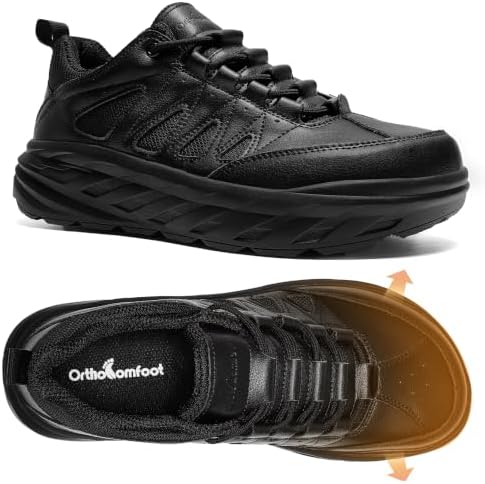
These OrthoComfoot sneakers combine a roomy toe area with built-in ergonomic arch support. The brand describes them as an option for wide, swollen, or sensitive feet, with a design intended to give the toes space to move. A layered cushioned outsole is included to absorb impact during everyday walking and standing.
The upper is described as leather with a breathable lining, and the all-black styling is aimed at casual wear, office use, and long periods on your feet. The product information also lists light outdoor activity as a use. It does not provide details about tennis-specific traction or side-to-side stability, so treat it as a comfort-oriented sneaker rather than a sure choice for competitive court play.
The built-in arch support is a key difference from the BRONAX, which has a removable insole but does not list built-in orthotic support. If you prefer a more structured feel, this model may be worth considering. If you need a custom insert, check whether its footbed can be removed before buying, as that detail is not included in the supplied information.
Pros:
- Roomy toe area is designed to reduce crowding.
- Built-in arch support adds structure.
- Cushioned outsole is designed to absorb impact.
- Leather upper and classic style suit everyday settings.
Cons:
- Not described as a dedicated tennis shoe.
- Removable insole and court-specific traction are not specified.
Verdict: Pick this pair for roomy everyday wear with built-in arch support, not as your first choice for frequent tennis matches.
Extrun Wide Toe Box Shoes: A Zero-Drop Feel for Daily Activity

Extrun’s wide-toe-box shoe is designed to let the toes spread more naturally, with a barefoot-style shape and zero-drop platform. The product description also lists high-resilience arch support, so this is not simply a flat, minimal shoe. Its breathable mesh upper is intended for daily wear, commutes, and gym sessions.
A rubber outsole with deep treads is described as providing grip on pavement, trails, and gym floors. The brand lists daily walks, light runs, weightlifting, and outdoor activities as possible uses. However, the supplied details do not identify a tennis-specific outsole or support system. Deep tread alone does not confirm that a shoe will feel stable during quick court cuts.
The zero-drop construction may feel different from a shoe with a raised heel, so consider your usual footwear and comfort preferences before switching. Compared with the cushioned BRONAX, this model emphasizes a level platform and barefoot-style fit. It may be a better match for someone who wants toe space and a zero-drop design, but it is not the clearest pick for dedicated tennis.
Pros:
- Wide toe box is designed to give toes room to move.
- Zero-drop platform provides a level heel-to-toe profile.
- Mesh upper is intended to support airflow.
- Deep-tread rubber outsole is listed for several everyday surfaces.
Cons:
- Zero-drop feel may not suit everyone.
- Dedicated court stability and tennis-specific traction are not specified.
Verdict: Consider Extrun for wide-toe-box daily use if you want a zero-drop design, but choose a court-focused model for regular tennis.
OrthoComfoot Slip-On Tennis Shoes: Convenient Entry and Arch Support

This OrthoComfoot model is marketed as an orthopedic tennis shoe and has a slip-on design with an elasticized collar. The product details highlight arch-supporting insoles, a cushioned heel cup, and padding intended to soften impact. Its mesh and synthetic leather upper is described as breathable and flexible.
Unlike the other models here, this pair is specifically described as suitable for tennis as well as road running, casual wear, and walking. Still, the supplied description does not give details such as outsole pattern, court surface compatibility, or a dedicated lateral-support structure. If you play often or move aggressively across the court, confirm that the shoe feels secure during side steps before relying on it for matches.
The slip-on style may appeal if you value easy entry, but a snug, stable fit matters when you move quickly. The details do not state that the toe box is wide, so shoppers with bunions should check the fit around the forefoot rather than assuming the orthopedic features mean extra toe room. Compared with the wide-toe-box options above, this model emphasizes convenience and arch support more than stated forefoot width.
Pros:
- Marketed for tennis, running, walking, and casual use.
- Slip-on design is intended to make the shoe easy to put on and remove.
- Arch-supporting insole and cushioned heel are included in the description.
- Mesh and synthetic leather upper is designed for breathability and flexibility.
Cons:
- Wide toe box is not specified, so bunion fit needs careful checking.
- Specific court traction and lateral-support details are not provided.
Verdict: This is the most tennis-oriented option in the group, but only choose it if the forefoot fit is comfortable and the shoe feels secure for your style of play.
How to Choose Men’s Tennis Shoes for Bunions
Look for a toe box that fits your foot shape
Extra room at the front can help avoid pressure on a bunion, but a shoe described as “wide” may still vary in shape and fit. Check the width and shape around the forefoot, not just the listed size. Your toes should have space without your foot sliding around inside the shoe.
Prioritize a secure fit for side-to-side movement
Tennis involves quick changes of direction, so a comfortable fit for walking is not always enough. The heel and midfoot should feel held in place, while the forefoot has enough room for your toes. If you can, try the shoes with your usual tennis socks and test controlled lateral steps before playing.
Check whether the shoe is built for court use
Look for clear information about tennis or court use, outsole grip, and support for lateral movement. The options in this guide vary: several are described mainly for walking, running, or gym use, and detailed court specifications are not provided for most of them. If you play often, a dedicated tennis shoe may be a better starting point than a general-purpose sneaker.
Consider cushioning and support preferences
Some shoes emphasize cushioning, while others highlight arch support or a level, zero-drop platform. Think about what feels comfortable for your feet and the type of movement you do. An orthotic-style insole does not guarantee that a shoe will suit your foot, and a cushioned midsole does not replace a secure court fit.
Check the insole and your insert needs
If you wear a custom orthotic or prefer a different insert, confirm whether the factory insole can be removed and whether there is enough room for your replacement. The BRONAX description specifically says its insole is removable. The supplied details for the other models do not clearly confirm removability.
Make fit and return terms part of your decision
Try shoes indoors first and check for pressure against the bunion, heel slip, and unwanted movement across the foot. Compare the seller’s current sizing information and return terms before ordering, since fit can vary by model. Stop using a pair that causes new or worsening discomfort.
Frequently Asked Questions
What should men with bunions look for in tennis shoes?
Look for a roomy forefoot, a comfortable fit that does not press on the bunion, and a secure heel and midfoot for side-to-side movement. For regular play, also check that the shoe is intended for court use.
Are wide running shoes suitable for tennis?
They may feel comfortable for walking or light activity, but a running or walking shoe may not provide the court-specific stability or traction you want for tennis. Check the shoe’s intended use and how secure it feels during lateral movement.
Which option in this guide clearly lists a wide toe box?
The BRONAX, OrthoComfoot leather sneaker, and Extrun models each describe a roomy or wide toe area. The OrthoComfoot slip-on tennis shoe does not specify a wide toe box, so check its fit carefully if forefoot space is your main concern.
Can arch support help with bunion discomfort?
Arch support is a feature that may affect how a shoe feels, but it does not guarantee relief from bunion discomfort. Fit around the bunion is also important. If pain persists or limits activity, ask a foot-care professional for guidance.
Is a zero-drop shoe a good choice for tennis?
It depends on your preferences and how the shoe feels during movement. The Extrun model has a zero-drop design, but its supplied details do not identify it as a dedicated tennis shoe. Try the style gradually and pay attention to comfort and stability.
Can I use my own orthotic in these shoes?
The BRONAX product information says its insole is removable. The supplied descriptions for the other models do not confirm that their insoles can be removed, so check the product details or ask the seller before buying if you need a particular insert.
Which shoe is the best choice for playing tennis?
Of these four, the OrthoComfoot slip-on is the one specifically marketed for tennis, but its toe-box width and court details are not provided. For frequent play, compare it with dedicated tennis shoes that clearly describe a wide forefoot and support for lateral movement.
Final Recommendation
For bunion-friendly everyday walking, the BRONAX and Extrun stand out for their stated wide toe boxes, while the OrthoComfoot leather sneaker adds built-in arch support. The OrthoComfoot slip-on is the most explicitly tennis-oriented choice in this group, but its wide-toe-box fit and court-specific details are unclear. Choose based on both forefoot comfort and stability, and consider a dedicated tennis shoe if you play regularly.