
Disclosure: As an Amazon Associate I earn from qualifying purchases. Learn more
Tennis asks your lower back to handle quick turns, reaching, serving, and repeated changes of direction. A back brace may offer added compression or stability, but the right choice depends on your comfort, the support level you need, and how well the brace fits while you move. These five options include sports-focused designs, adjustable lumbar belts, and a low-profile brace that also names tennis as a suitable activity.
Use a brace as one part of a plan for back discomfort, not as a replacement for medical advice or recovery care. If you have ongoing or severe pain, check with a health professional before playing.
| Brace | Best for | Support design | Fit note |
|---|---|---|---|
| BraceAbility Spine Sport Lower Back Brace | Active use across multiple sports | Adjustable dual-pulley compression | Measure your waist; the supplied sizing details specify XL for 45–50 inches |
| MUELLER Adjustable Lumbar Back Brace | Adjustable everyday lumbar support | Removable pad and four flexible steel springs | Regular size fits waist sizes 28–50 inches at maximum stretch |
| Zamst ZW-5 Sports Back Brace | Sports-specific stability | Shaped back panel, auxiliary belt, and pelvic straps | Measure around your natural waist at the navel |
| MUELLER Lumbar Back Brace with Removable Pad | Targeted compression for daily wear | Four steel springs and a removable lumbar pad | Several waist ranges are listed, from 22–30 inches to 50–70 inches |
| Golf Huggy Back Brace | Low-profile support for tennis and other activities | Dual side tension bands and removable lumbar pad | Measure at the navel; sizes range from S to XL |
Our Picks: Best Back Braces for Tennis reviews
BraceAbility Spine Sport: Best for active, multi-sport use

The BraceAbility Spine Sport is designed for people who want lower-back support while staying active. Tennis is specifically included among its suggested activities, alongside running, golf, and gym workouts. Its adjustable dual-pulley system lets you change the compression, which can be useful if you want a closer fit for movement rather than a fixed level of tension.
The brace is made with lightweight, breathable nylon mesh intended to allow airflow and mobility. That makes it a practical option to consider for court sessions, where a bulky or warm-feeling belt may be distracting. Its design also aims to shift some load toward the abdomen and support posture, though a brace should not be treated as a way to prevent injury or replace professional guidance.
Fit is important: the supplied sizing information says to measure your waist with a flexible tape, and specifies XL for a 45–50-inch waist. Because that is the only size range provided here, check the current size options and chart before ordering. Compared with the two MUELLER braces, this model emphasizes active use and adjustable compression rather than a removable lumbar pad.
Pros:
- Tennis and several other active pursuits are named in the intended use.
- Dual-pulley adjustment allows you to set the compression.
- Breathable mesh is designed for airflow during exercise.
- Lightweight construction is intended to preserve mobility.
Cons:
- The supplied sizing details give a range only for XL, so check the full chart carefully.
- It may not be the best match if you specifically want a removable lumbar pad.
Verdict: Choose the BraceAbility Spine Sport if you want an adjustable, breathable brace designed for tennis and other exercise, and its size chart gives you a reliable fit.
MUELLER Adjustable Lumbar Brace: Best for customizable everyday support

This MUELLER brace uses a double-layer design so you can adjust compression around your abdomen and lower back. It also has a removable lumbar pad for more concentrated cushioning and four flexible steel springs that are intended to add stability while conforming to your back.
Breathable fabric is part of the design, but the product information does not specifically identify tennis as an intended activity. It may suit someone seeking a versatile lumbar belt for daily use who also wants to try it for recreational play. For tennis, consider whether its level of support feels comfortable during bending, reaching, and rotation; a snug fit should not interfere with your movement or breathing.
The listed regular size fits waist sizes 28–50 inches at maximum stretch. That broad range may be convenient, but measuring carefully is still essential for a secure fit. Compared with the Zamst ZW-5, this model has a more general-purpose description rather than a sports-focused set of pelvic straps and a shaped back panel.
Pros:
- Double-layer construction allows adjustable compression.
- Removable pad offers an option for concentrated lumbar cushioning.
- Four flexible steel springs are designed to add stability.
- Breathable fabric is specified in the product details.
Cons:
- Tennis is not specifically named in the supplied intended-use information.
- The listed fit range is broad, so getting the right tension may take adjustment.
Verdict: Consider this MUELLER model if you want adjustable everyday support with a removable pad and plan to confirm that its fit allows comfortable tennis movement.
Zamst ZW-5: Best sports-focused design for lumbar stability
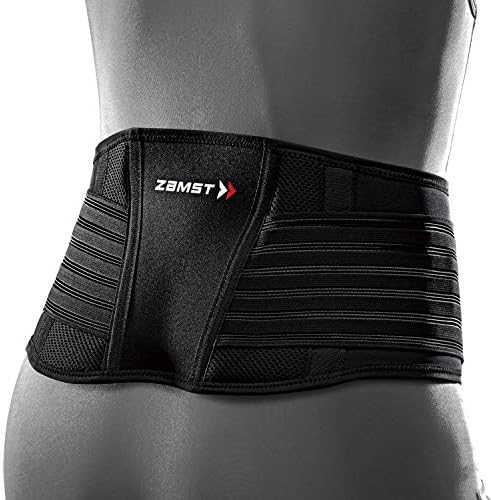
The Zamst ZW-5 is built with sports in mind and names tennis, golf, baseball, basketball, and volleyball among its intended activities. Its design combines a three-dimensional back panel with an auxiliary belt and pelvic straps. The product description says these parts work together to increase pressure and support the lumbar and pelvic areas.
The brace is made with three-dimensional mesh for breathability, and urethane is used to help reduce shifting. Those details may appeal if you want a more structured sports brace rather than a simple wraparound belt. The company describes the support level as moderate, which is worth keeping in mind if you are looking for very firm compression.
For sizing, measure the circumference of your natural waist at the navel and consult the chart; the listed range runs from XS to 2XL. If your measurement falls between two sizes, the product directions recommend choosing the larger one. Compared with the BraceAbility model, the Zamst puts more emphasis on a shaped panel and pelvic straps, while the BraceAbility uses a dual-pulley adjustment system.
Pros:
- Tennis is specifically listed as a suitable sport.
- Back panel, auxiliary belt, and pelvic straps are designed to work together.
- Mesh material is intended to support breathability during exercise.
- Urethane is used to help limit shifting.
Cons:
- The stated support level is moderate, which may not suit someone seeking a firmer brace.
- You need to use the brand’s waist-based size chart to select a fit.
Verdict: The Zamst ZW-5 is a strong option to consider if you want a sports-oriented brace with tennis-specific use and a design focused on lumbar and pelvic stability.
MUELLER Lumbar Brace with Removable Pad: Best for targeted compression

This MUELLER lumbar brace combines four steel springs with a removable compression pad. The springs are designed to provide firm support, while the pad lets you choose whether to add focused cushioning at the lower back. Adjustable closure straps let you tighten the wrap to a comfortable level.
The breathable mesh is intended for comfortable wear, and the fabric is treated to help prevent odor. The product description focuses on back support for adults and activities such as lifting; it does not specifically name tennis. That makes it a possible general-purpose choice, but it is sensible to check that the firmer support does not feel restrictive during court movement.
This model offers several listed size ranges: Small fits 22–30 inches, Regular fits 28–50 inches, and Plus fits 50–70 inches around the widest part of the waist. Measure where directed rather than choosing by your usual clothing size. Compared with the other MUELLER option here, this brace specifies firm, targeted compression and includes the same kind of removable-pad feature, while the newer listed model describes a double-layer adjustable design.
Pros:
- Four steel springs are designed to provide firm, targeted support.
- Removable pad lets you adjust the cushioning at the lumbar area.
- Adjustable straps allow you to change the fit.
- Multiple waist ranges are provided in the sizing information.
Cons:
- Tennis is not specifically listed among its intended activities.
- Its firm-support design may feel like more brace than some players want for court movement.
Verdict: Pick this MUELLER brace if targeted compression and a removable pad matter more to you than a tennis-specific design, and you can confirm a comfortable fit.
Golf Huggy Back Brace: Best low-profile option for tennis and pickleball

Although this brace is designed for golfers, its supplied description also lists tennis and pickleball. It uses dual side tension bands and a removable lumbar pad so you can adjust pressure. The low-profile design is intended to fit under clothing, which may appeal if you prefer support that is less noticeable beneath a tennis shirt.
The brace is described as lightweight and breathable, with a fit intended to support movement during sports. Because tennis involves repeated turns and quick reaches, a low-profile design may be worth considering if bulk is a concern. The product is still a back support, though, so check your range of motion and comfort before relying on it during a full match.
For sizing, measure around your waist at the navel. The listed ranges are S for 27–33 inches, M for 33–38 inches, L for 38–44 inches, and XL for 44–48 inches. If you fall between sizes or want a less snug feel, the product information recommends the larger size. Compared with the Zamst ZW-5, this option emphasizes a discreet profile and adjustable side bands rather than a shaped panel with pelvic straps.
Pros:
- Tennis and pickleball are specifically listed among its uses.
- Low-profile construction is designed to fit under clothing.
- Dual side tension bands and a removable pad allow pressure adjustments.
- Specific waist ranges are provided for sizes S through XL.
Cons:
- The product is primarily designed for golfers, so its fit may not suit every tennis player.
- The listed size range ends at a 48-inch waist.
Verdict: Consider the Golf Huggy if you want a low-profile brace that explicitly includes tennis and your waist measurement falls within its listed sizes.
How to Choose a Back Brace for Tennis
Match the support style to your needs
Back braces differ in how they create support. Some use adjustable straps for compression, while others add a lumbar pad, flexible stays, a shaped back panel, or pelvic straps. Think about whether you want a simple adjustable wrap or a more structured design. More components do not automatically mean a better fit for your body or your game.
Keep court movement in mind
Tennis involves bending, turning, reaching, and changing direction. A brace should feel secure without making it hard to move naturally. Look for product details that mention sports use, breathability, or a low-profile fit, then consider how its structure may feel during your movements. Stop using it if it causes discomfort or limits your movement.
Measure before choosing a size
Follow each product’s measurement instructions rather than relying on your clothing size. Some braces ask you to measure at the navel, while others specify the widest part of your waist. Compare your measurement with the brand’s chart, and pay attention to what it recommends if you fall between sizes. A poor fit can make a brace uncomfortable or less useful.
Consider heat and clothing
A breathable mesh design or a low-profile shape may be more comfortable during active play, especially if you plan to wear the brace under a shirt. Product descriptions vary, so compare the materials and design details rather than assuming that every brace will feel equally cool or discreet.
Choose adjustability you can manage
Adjustable straps, dual-pulley systems, and removable pads let you change the fit or where you feel cushioning. These features can be helpful if your comfort needs vary, but they also mean you will need to set up the brace correctly. Begin with a comfortable level of tension and follow the product instructions.
Think about when you will wear it
If you want a brace mainly for tennis, a sports-specific option may be a more natural starting point. If you also need support for daily activities, a general-purpose lumbar brace could be more versatile. Compare the intended uses, support features, and fit rather than selecting a brace based on a single label.
Use a brace as part of a broader plan
A back brace does not diagnose or treat the cause of pain. If discomfort is persistent, severe, or getting worse, speak with a health professional about whether a brace is appropriate and how to return to play safely. Follow any advice you receive about activity, exercise, and recovery.
Frequently Asked Questions
Which of these braces is specifically intended for tennis?
The BraceAbility Spine Sport and Zamst ZW-5 both name tennis in their supplied product descriptions. The Golf Huggy also lists tennis among its uses. The two MUELLER braces are described as general lumbar support options rather than tennis-specific models.
Can I wear a back brace during a tennis match?
These products include designs intended for sports or active use, but comfort and mobility vary from person to person. Make sure the brace fits securely without restricting your movement or breathing. If you have an injury or ongoing pain, ask a health professional whether playing with a brace is appropriate.
How should I measure for a back brace?
Use the measurement location specified by the product. The Zamst and Golf Huggy instructions call for measuring at the navel, while the MUELLER brace with a removable pad says to measure around the widest part of the waist. Check the size chart for the exact model you plan to buy.
Is a firmer brace better for tennis?
Not necessarily. A firmer design may feel too restrictive for some players, while a lighter or more adjustable brace may be more comfortable for movement. The right choice depends on your needs, fit, and professional guidance if you are managing back pain.
What is the difference between a lumbar pad and a pulley or tension system?
A removable lumbar pad adds a cushion or concentrated contact point at the lower back. A pulley or tension system changes how tightly the brace compresses around your body. Some braces combine these features, while others use one approach.
Can a back brace prevent tennis injuries?
The supplied product information describes support and compression, but it does not establish that wearing a brace prevents tennis injuries. A brace should not replace sound training, appropriate recovery, or medical advice.
Which brace is the best starting point for most tennis players?
The Zamst ZW-5 is a reasonable starting point if you want a sports-focused design that specifically lists tennis and includes a shaped panel with pelvic straps. If you prefer adjustable compression and a breathable mesh design, compare it with the BraceAbility Spine Sport. Fit and comfort should guide the final choice.
Final Recommendation
For a sports-specific option, the Zamst ZW-5 stands out for its tennis-focused use and combination of a shaped back panel, auxiliary belt, and pelvic straps. The BraceAbility Spine Sport is a strong alternative if adjustable compression and breathable mesh matter most, while the Golf Huggy is worth considering if you want a low-profile brace that also names tennis. Whichever you choose, use the product’s size chart and seek professional advice for persistent or severe back pain.