
Disclosure: As an Amazon Associate I earn from qualifying purchases. Learn more
Choosing a tennis strategy book is easiest when you start with the problem you want to solve. Maybe you need quick reminders during a match, a broader set of tactics to practice, or coaching that also covers strokes and the mental side of tennis. These four books take different approaches to singles strategy, so the best fit depends on how much guidance you want and how you plan to use it.
Quick Comparison
| Book | Best suited for | Stated focus |
|---|---|---|
| Tennis Singles Strategy Book: Winners Quick Reference Guide | Players who want a concise strategy reference | Singles strategy and quick-reference guidance |
| Winning Singles Strategy for Recreational Tennis Players | Recreational players looking for a wide range of tactics | 140 tips and tactics for improving your game |
| Tennis Strategy: Singles Tactics for Club and League Players | Club and league players making shot choices | Where to hit and how to choose a shot |
| Complete Tennis | Players who want strategy alongside wider tennis coaching | Strokes, singles and doubles strategy, fitness, and the mental game |
Our Picks: Best Tennis Books for Singles Strategy reviews
1. Tennis Singles Strategy Book: Winners Quick Reference Guide
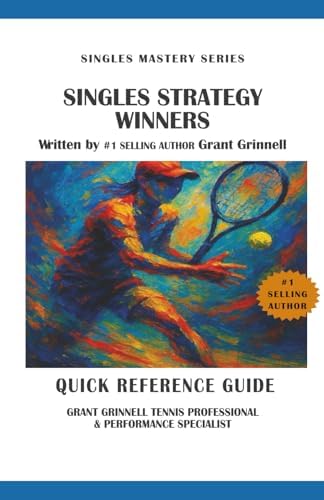
This title presents itself as a quick reference for singles strategy. That focus may appeal if you already know the basics and want a compact way to revisit tactical ideas, rather than a broad introduction to every part of tennis.
A reference-style approach can be useful when you have a specific question in mind, such as how to think through a point or what strategic idea to focus on in practice. The title alone does not reveal how the material is organized or whether it includes diagrams, drills, or match examples, so check the product listing if those details matter to you.
Compared with the book of 140 tips, this pick sounds more focused on quick consultation than on offering a clearly stated number of tactics. It may suit a player who values direct reminders, but it is harder to judge its depth from the title alone.
Pros:
- Clearly focused on singles strategy
- Quick-reference format is part of its stated positioning
- May suit players who want tactical reminders rather than broad tennis instruction
Cons:
- The title does not specify the topics or level of detail covered
- Check the listing for format and learning aids before choosing it
Verdict: Choose this one if you want a singles-strategy reference and prefer a focused resource over a book that promises a wider range of coaching topics.
2. Winning Singles Strategy for Recreational Tennis Players

This book is aimed squarely at recreational singles players. Its title promises 140 tips and tactics, making it the most explicitly tactics-focused choice in this group. That stated breadth could give you plenty of ideas to explore as you work on making better decisions during points.
A large collection of tips can be useful when you want to focus on one small change at a time. It can also help you identify areas to practice, rather than trying to overhaul your whole game at once. The title does not explain how the tips are grouped or whether they include examples and drills, so look at the listing if you prefer a particular teaching style.
Compared with the quick-reference guide, this book gives a clearer indication of the amount of tactical material it intends to cover. It is also more specifically aimed at recreational players than the broader Complete Tennis. The trade-off is that a high tip count does not, by itself, tell you how deeply each idea is explained.
Pros:
- Specifically targets recreational singles players
- The title states that it includes 140 tips and tactics
- Could give you multiple ideas to work through over time
- More clearly defines its intended audience than a general tennis book
Cons:
- The title does not show how much explanation each tip receives
- May be less suited to readers seeking coaching on strokes, fitness, or doubles
Verdict: This is a sensible starting point if you are a recreational player who wants a broad collection of singles tactics to consider and practice.
3. Tennis Strategy: Singles Tactics for Club and League Players

This title is written for club and league players and puts shot selection at the center of its promise. It calls out two practical questions—where to hit and how to choose the right shot—which makes its intended focus clear for players who want to think more carefully during a match.
That emphasis may be especially relevant if you can make your strokes but are unsure which option to choose in a given situation. The book appears more narrowly focused on singles tactics than Complete Tennis, while its stated audience is more specific than the recreational-player focus of Winning Singles Strategy.
The available title does not spell out the full scope of its final phrase or explain the book’s format, examples, or teaching methods. If you want detailed coverage of a particular situation, check the listing before buying to confirm that the material matches your needs.
Pros:
- Names club and league players as its intended audience
- Focuses on shot choice and where to hit
- Offers a more specific tactical angle than a general tennis guide
Cons:
- The title gives limited detail about the full range of topics
- It may not be the best match if you want broad instruction on strokes or fitness
Verdict: Consider this book if your main goal is to make smarter shot choices in club or league singles matches.
4. Complete Tennis: A Broader Guide to Strategy and Coaching

Complete Tennis takes the broadest approach in this selection. Its title covers stroke coaching, singles and doubles strategy, fitness, and the mental game. That wider scope may be useful if you want to work on several parts of your tennis development rather than focus only on point tactics.
For a singles player, the advantage is context: strategy is presented alongside other areas of the sport that can affect how you play. The trade-off is that a broad book may devote less attention to any one tactical question than a singles-only title. The title also says it is for club players, which gives you a clue about its intended audience.
The title does not provide details about the book’s structure, specific drills, or how its different coaching topics are balanced. If your priority is a compact tactical reference, the first option may be a closer match; if you want coverage beyond strategy, this one has the widest stated scope.
Pros:
- Covers singles and doubles strategy alongside strokes
- Also includes fitness and the mental game in its stated scope
- May suit club players looking for wider tennis coaching
Cons:
- Its broad coverage may be more than you need for singles tactics alone
- The title does not show how much space is devoted to each topic
Verdict: Pick this book if you want singles strategy as part of a wider tennis-coaching resource, rather than as the sole focus.
How to Choose a Tennis Book for Singles Strategy
Match the book to your playing level
Start with the audience named in the title. A book for recreational players may be a natural fit if you play casually and want practical ideas to try. A title aimed at club or league players may better match the decisions and match situations you face in organized play. If the audience is not clear, check the listing for more detail before deciding.
Decide how focused you want the material to be
Some players want a resource devoted to singles tactics; others want strategy alongside stroke instruction, fitness, or mental skills. A focused book can make it easier to concentrate on point construction and shot choices. A broader guide may be more useful if you are trying to improve several parts of your game at the same time.
Look for the kind of guidance you will use
A quick-reference guide may appeal if you want concise reminders, while a collection of tips may give you more individual ideas to explore. If you learn best from worked examples, drills, or diagrams, check that the listing confirms those features. Do not assume a book includes a particular format or teaching aid unless it is stated.
Consider your main on-court question
Think about what you want to improve: choosing where to hit, deciding which shot is right, or building a wider game plan. The title of Tennis Strategy: Singles Tactics for Club and League Players directly points to shot selection, while the other books signal either a wider tactical collection or broader coaching. Choose the one closest to the decisions you want help making.
Check the format and scope before buying
The supplied product titles do not establish details such as format, layout, or how thoroughly each topic is explained. Check the current product listing for those points, especially if you prefer a particular reading format or want a resource you can consult courtside. Also make sure the book’s stated scope matches your level and goals.
Frequently Asked Questions
Which book is most focused on singles strategy?
Tennis Singles Strategy Book: Winners Quick Reference Guide and Winning Singles Strategy for Recreational Tennis Players both put singles strategy at the center of their titles. The first is positioned as a quick reference, while the second states that it includes 140 tips and tactics.
Which option is aimed at recreational players?
Winning Singles Strategy for Recreational Tennis Players names recreational players in its title. That makes it the clearest audience match if you play for fun and want singles tactics suited to that level.
Which book focuses on choosing where to hit?
Tennis Strategy: Singles Tactics for Club and League Players specifically highlights where to hit and how to choose the right shot. It may be the most relevant choice if those decisions are your main concern.
Is a quick-reference guide enough to improve my match strategy?
A quick-reference guide may help you revisit tactical ideas, but improvement also depends on applying those ideas in practice and matches. Check the listing to see how much explanation and practical guidance the book provides.
Should I choose a singles-only book or a broader tennis guide?
Choose a singles-focused title if you want to spend most of your reading time on point tactics and shot choices. Choose Complete Tennis if you also want the book to address strokes, doubles strategy, fitness, and the mental game.
Do these books include diagrams or drills?
The product titles provided do not confirm whether diagrams or drills are included. Check the product listing for format details and examples of the material before buying.
Final Recommendation
For recreational players who want a clearly stated collection of tactics, Winning Singles Strategy for Recreational Tennis Players is the most direct starting point. Choose Tennis Strategy: Singles Tactics for Club and League Players if shot selection is your main challenge, or Complete Tennis if you want strategy as part of broader coaching. If you prefer a focused reference, consider Tennis Singles Strategy Book: Winners Quick Reference Guide and confirm that its format and level of detail suit the way you learn.