
Disclosure: As an Amazon Associate I earn from qualifying purchases. Learn more
Neuropathy can make shoe fit and foot protection especially important, since reduced sensation may make it harder to notice rubbing or pressure. The shoes below offer features such as roomy toe boxes, cushioning, and arch support, but those features do not guarantee a safe fit or treat neuropathy. Check with your healthcare professional about footwear needs, and inspect your feet regularly—especially after wearing new shoes.
These picks are described as walking or athletic shoes, but they do not all provide the same level of tennis-specific support. If you plan to play, pay close attention to fit and stability during side-to-side movement, not just comfort while walking.
Quick Comparison
| Product | Standout features | Best suited for | Tennis note |
|---|---|---|---|
| OrthoComfoot Men’s Wide Leather Diabetic Orthopedic Sneakers | Wide toe area, built-in arch support, cushioned outsole | Walking, standing, and everyday wear | Not specifically described as a tennis shoe |
| Men’s Orthopedic Diabetic Wide Tennis Shoes | Wide toe box, arch-support insoles, lightweight construction | Walking and varied athletic activities | Product description includes tennis use |
| Men’s Orthopedic Diabetic Wide Shoes with Detachable TPU Support | Adjustable arch support, roomy front, breathable mesh upper | Walking and everyday use with adjustable support | Product description lists tennis among possible uses |
Our Picks: Best Men’s Tennis Shoes for Neuropathy reviews
OrthoComfoot Wide Leather Sneakers for Walking and Everyday Comfort
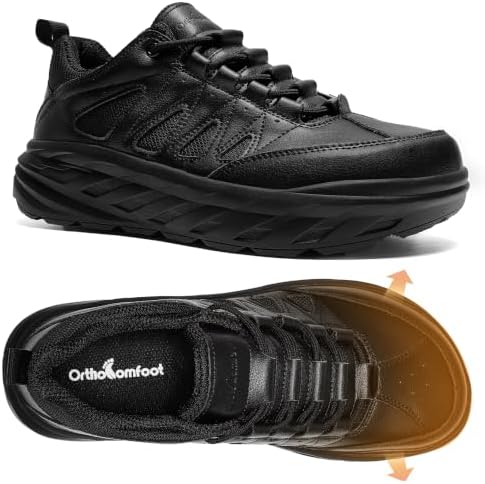
This wide leather sneaker is aimed at people who want a roomy fit and built-in support for daily wear. Its key features include an orthotic-style arch support, a cushioned outsole, and a wide toe area intended to reduce crowding around the toes.
The leather upper and soft lining give this pair a more classic, everyday look than a lightweight mesh athletic shoe. The product description says the lining is breathable, though leather may feel warmer than mesh to some wearers. Its cushioned sole is designed to soften impact during walking and long periods of standing.
This is the most walking- and work-focused option in the group. It may suit you if you want a wide casual sneaker for daily routines and value a leather upper. It is not specifically described as a tennis shoe, so don’t assume it offers the lateral support or court grip you need for quick changes of direction.
As with any shoe for reduced foot sensation, check for pressure points and rubbing before wearing it for a long period. A wide toe box can help with space, but the shoe still needs to fit securely through the heel and midfoot.
Pros:
- Wide toe area designed to leave more room for the toes
- Built-in arch support
- Cushioned outsole for walking and standing
- Leather upper offers a classic casual style
Cons:
- Not specifically described as a tennis shoe
- Leather may feel less airy than a mesh upper
Verdict: Choose this pair for roomy everyday walking and standing comfort, but consider a tennis-specific design if you need shoes for regular court play.
OrthoComfoot Wide Tennis Shoes with Cushioned Support

This athletic-style option is the most directly positioned for tennis in its product description, which also lists running, walking, and everyday use. It pairs a wide toe box with supportive insoles and a shock-absorbing sole. The stated design goal is to reduce pressure around the toes and soften impact underfoot.
The shoe is described as lightweight and breathable, which may be useful if you wear athletic shoes for extended periods. Its roomy front may be worth considering if conventional tennis shoes squeeze your toes. Still, a wide toe box alone does not confirm that the shoe will fit your foot shape or stay secure during fast lateral movement.
Compared with the leather sneaker above, this pair has a more sport-oriented description. Compared with the adjustable-support option below, its arch support is presented as part of the insole rather than as a removable, height-adjustable support system. The product details do not specify court outsole features, so check the sole and fit carefully before using it for tennis.
Pros:
- Product description specifically includes tennis among its uses
- Wide toe box intended to reduce crowding
- Lightweight construction and breathable design
- Cushioned sole designed to absorb impact
Cons:
- Details do not establish how well it supports sharp side-to-side court movements
- Arch support is not described as adjustable
Verdict: This is the clearest athletic and tennis-oriented choice in the group, but confirm that it fits securely and feels stable before using it on court.
OrthoComfoot Wide Mesh Shoes with Detachable Arch Support

This OrthoComfoot shoe combines a wide toe box with a breathable mesh upper and a removable TPU arch-support component. The product description says the support can be detached and adjusted to change the arch height, offering more flexibility than a shoe with fixed support.
The mesh upper is described as soft and breathable, while the cushioned EVA sole is intended to provide cushioning and rebound. An adjustable lace-up closure can help you fine-tune the fit, though laces should be secured without creating pressure across sensitive areas. The product description lists walking, work, travel, and tennis among its possible uses.
This model may be a better fit for someone who wants to adjust the arch support or prefers mesh over leather. Its listed uses are broad, however, and the available details do not explain specific court traction or lateral stability. If tennis is your main activity, compare its fit and movement control with a purpose-built court shoe before relying on it.
Pros:
- Detachable TPU component allows adjustment of arch support
- Roomy toe box and adjustable laces
- Breathable mesh upper
- Product description includes tennis among its uses
Cons:
- Specific court traction and lateral support are not detailed
- Adjustable support may require some trial and adjustment to find a comfortable fit
Verdict: Consider this pair if adjustable arch support and a mesh upper are priorities, while checking carefully that it provides enough stability for your intended activity.
How to Choose Men’s Tennis Shoes for Neuropathy
Start with a safe, comfortable fit
Look for enough room at the front so your toes are not pressed together, but avoid a shoe that lets your foot slide. A roomy toe box can be helpful if your feet are wide or swollen. Try shoes on with the socks you plan to wear, and check that the heel and midfoot feel secure without tight pressure.
Check pressure points and shoe interiors
With reduced sensation, a small seam, rough edge, or tight spot may be harder to notice. Examine the inside of each shoe and check your feet after trying a new pair. If you notice redness, rubbing, blisters, or a sore spot, stop wearing the shoes and seek professional guidance. Your clinician can advise you on footwear and foot checks based on your needs.
Match the support to your foot and activity
Arch support can feel different from one shoe to another. Some people may prefer fixed support, while others may want a removable or adjustable component. A shoe that feels comfortable for walking may not feel secure during tennis, where you move quickly from side to side. If you play on court, assess stability and grip as well as cushioning.
Consider cushioning without ignoring stability
Cushioning is designed to soften impact, but a soft feel alone does not tell you whether a shoe will control movement well. For tennis, look for a secure fit and a stable platform during lateral steps. The product details here describe cushioning, but do not provide enough information to confirm court-specific performance for every model.
Choose an upper that suits your needs
Mesh uppers are described as breathable and lightweight, while the leather option has a more traditional casual look. Consider how warm your feet tend to get and whether you prefer a flexible athletic feel or a more structured everyday shoe. Whatever the material, make sure the upper does not rub or press on sensitive areas.
Introduce new shoes gradually
Rather than wearing a new pair for a long match or full day right away, try them for a short period in a safe setting. Check your feet afterward, and stop if you find irritation or pressure. A qualified healthcare professional can help if you are unsure whether a shoe is suitable for your foot condition.
Frequently Asked Questions
Can tennis shoes help with neuropathy?
A shoe with a comfortable fit, cushioning, and enough toe room may make activity more comfortable for some people. It does not treat neuropathy or prevent all foot problems. Ask your healthcare professional what features are appropriate for your situation.
Which of these shoes is most directly described for tennis?
The second product, Men’s Orthopedic Diabetic Wide Tennis Shoes, explicitly lists tennis among its intended uses. The third product also lists tennis, while the first is described mainly for walking, work, and everyday wear. The supplied details do not confirm court traction or lateral stability for any of them.
Should I choose a wide toe box?
A wide toe box may be worth considering if your toes feel crowded or your feet are wide or swollen. It should still fit securely elsewhere. Extra room at the front is not helpful if your foot slides inside the shoe.
Is adjustable arch support better than fixed support?
Neither is automatically better. The adjustable support in the third shoe offers a way to change or remove the support component, while the other models describe fixed arch support. Choose the option that feels comfortable and fits your needs, and consult a foot-care professional if you need guidance.
What should I check before playing tennis in a new pair?
Check that your heel stays secure, your toes have room, and the shoe feels stable during gentle side steps. Inspect your feet afterward for redness or rubbing. Since reduced sensation can make irritation less noticeable, do not rely only on how the shoe feels during play.
Are these shoes a substitute for medical footwear?
No. Product descriptions that mention diabetes or neuropathy do not establish that a shoe is right for every person or meets a particular medical need. Ask your healthcare professional whether you need prescribed or specially fitted footwear.
Final Recommendation
For a more athletic option, the Men’s Orthopedic Diabetic Wide Tennis Shoes are the most directly described for tennis, while the OrthoComfoot mesh model stands out for its detachable arch-support component. The leather sneaker is better positioned for everyday walking and standing than court play. Whichever pair you consider, prioritize a secure, pressure-free fit, inspect your feet regularly, and ask your healthcare professional for advice tailored to your neuropathy.