
Disclosure: As an Amazon Associate I earn from qualifying purchases. Learn more
Foam tennis balls slow the game down and make early practice less intimidating, especially for young players learning to rally. The right choice depends on where you plan to play, how many balls you need, and whether you want a true foam ball or a slower felt transition ball. Below, we compare five options for beginner lessons, indoor drills, and group practice.
Quick Comparison
| Product | Best for | Pack size | Standout feature |
|---|---|---|---|
| Wilson Starter Foam Tennis Ball | Short-court starter play | 3 balls | Oversized ball with reduced bounce |
| Amport Soft Foam Tennis Balls | Home and group practice | 9 balls | Lightweight, quiet foam in three colors |
| Penn QST 36 Youth Foam Balls | Young beginners | Pack quantity not specified | Oversized design and controlled bounce |
| Penn QST 36 Red Foam Training Balls | Lessons and larger groups | 36 balls | Bulk case for indoor beginner practice |
| Oncourt Offcourt Quick Start Red Balls | 60-foot court practice | 12 balls | Felt transition balls; listing marked unavailable |
Our Picks: Best Foam Tennis Balls reviews
Wilson Starter Foam Tennis Ball: A Simple Pick for Short-Court Play

Wilson’s starter set includes three oversized soft foam balls designed for 36-foot courts, driveways, and playgrounds. The product details specify 25% less bounce, a feature intended to make the ball easier to manage during early rallies.
The three-ball pack makes sense for a child and parent or a small practice session, but it may not be enough for a coach working with several players. Its stated ITF approval is another useful point for shoppers looking for a ball intended for structured beginner play.
One detail to keep in mind: the product information gives a reduced-bounce figure but does not explain the comparison used to calculate it. If you need a large supply or want balls in multiple colors, the Amport or Penn case options may be a better fit.
Pros:
- Designed for 36-foot courts and informal spaces such as driveways
- Oversized, soft foam construction
- Stated 25% less bounce
- ITF approved, according to the product details
Cons:
- Three balls may be limiting for group lessons
- The stated bounce reduction does not identify its comparison point
Verdict: Choose the Wilson set if you want a small, straightforward supply of oversized foam balls for short-court beginner practice.
Amport Soft Foam Balls: A Versatile Nine-Ball Set for Home Practice

Amport’s set contains nine solid foam balls, each listed as 2.75 inches across and 20 grams. The pack includes three each in yellow, blue, and red, giving you more options for sorting drills or keeping balls easy to spot in a practice area.
The product is described for indoor and outdoor use, including living rooms, garages, backyards, and playgrounds. Its soft, lightweight construction is aimed at beginners and children who are learning to hit, catch, and rally. The listing also describes the balls as relatively quiet for indoor paddle drills and as squeezable for fidget use.
This is the most multipurpose option in the group, but it is not a regulation pickleball. Its stated size and solid foam design may suit casual coordination practice, while players seeking a tennis-specific training ball for a particular court program may prefer one of the Penn or Wilson choices.
Pros:
- Nine balls in three bright colors
- Lightweight 20-gram design and listed 2.75-inch diameter
- Described for indoor and outdoor practice
- Can also be used for squeezing and fidgeting
Cons:
- Not a regulation pickleball, despite being described for paddle practice
- Does not specify approval for a junior tennis program
Verdict: Pick the Amport set if you want a larger, colorful supply for casual home practice, coordination drills, or classroom activities.
Penn QST 36 Youth Foam Balls: Controlled Bounce for New Players

Penn’s QST 36 is an oversized foam ball designed for beginners on a 36-foot court. Its higher-density construction is intended to provide a controlled bounce and reduced speed, giving young players more time to get into position and practice basic strokes.
The red-and-yellow two-tone felt design is intended to make spin easier to track. Penn also lists the ball as approved for the USTA 10 and Under Tennis Program. Those details make it a focused option for junior tennis instruction rather than a general-purpose foam ball for household play.
The product information does not specify the pack quantity, so check the listing if you are planning a lesson or need a certain number of balls. Compared with the Wilson three-pack, this Penn option puts more emphasis on its junior-program design and two-tone visibility.
Pros:
- Oversized design for beginner practice on a 36-foot court
- Higher-density construction for controlled bounce and reduced speed
- Two-tone red-and-yellow design intended to help players track spin
- Listed as USTA approved for the 10 and Under Tennis Program
Cons:
- Pack quantity is not stated in the supplied product details
- Its junior tennis focus may be less useful for general-purpose indoor play
Verdict: Choose the Penn QST 36 if your priority is a junior-focused, slower ball for teaching basic tennis skills on a 36-foot court.
Penn QST 36 Case: A Bulk Option for Lessons and Indoor Courts

This Penn case contains 36 red foam training balls, arranged as three bags of 12. The product details recommend them for beginning players eight and under on a 36-foot court, and describe them as lightweight, oversized, and designed for reduced speed.
A case is practical for instructors, schools, or families running group drills: having multiple balls can reduce interruptions when players are learning strokes. The listing also identifies the balls as suitable for indoor court settings and says they are USTA and ITF approved and endorsed by the PTR.
The main trade-off is that 36 balls may be more than a household needs for occasional practice. If you need only a few balls, the Wilson or single-pack Penn option is easier to match to a smaller practice setup. The case is also specifically positioned for young beginners, not as an all-purpose ball for every tennis level.
Pros:
- 36 balls split into three bags of 12
- Oversized, lightweight design with reduced speed
- Designed for indoor court practice and young beginners
- Listed as USTA and ITF approved and PTR endorsed
Cons:
- A case may be excessive for occasional individual practice
- Designed for a specific beginner age group and 36-foot court format
Verdict: The Penn case is the strongest fit for coaches, schools, or families who need a substantial supply of beginner balls for organized practice.
Oncourt Offcourt Quick Start: A Felt Transition Set, Not a Foam Pick
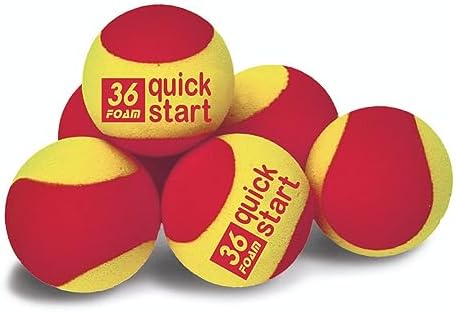
The product title calls these red foam tennis balls, but the supplied description identifies them as felt transition balls made with acrylic felt. It describes them for 60-foot USTA QuickStart and 10-and-under courts, rather than as oversized foam balls for 36-foot play. That distinction matters if you specifically need foam.
The set includes 12 balls, and the listing says the felt is designed for greater durability than much of the competition. It also states that the transition balls are USTA approved. These details may make the set worth considering for players moving into a different stage of junior tennis, but it is not the closest match to the foam-ball focus of this guide.
The supplied availability information marks this item unavailable. If you are comparing it with foam options, treat it as a reference for felt transition-ball practice and confirm availability before planning around it.
Pros:
- Set of 12 balls for group practice
- Designed for 60-foot QuickStart and 10-and-under courts
- Listing describes durable acrylic felt
- Stated to be USTA approved
Cons:
- Product details describe felt transition balls, not foam balls
- Supplied availability information marks the listing unavailable
Verdict: Consider this set only if you want felt transition balls for 60-foot court play; for true foam practice, choose one of the other options.
How to Choose Foam Tennis Balls
Match the Ball to the Court and Player
Start with the intended court size and the player’s stage of learning. The Wilson and Penn QST 36 options are described for 36-foot courts, while the Oncourt Offcourt set is described for 60-foot courts and is a felt transition ball rather than a foam ball. A ball made for a different court format may not give you the type of practice you want.
Choose the Bounce and Speed That Support Practice
Slower balls give beginners more time to react and work on contact and movement. The Wilson listing specifies 25% less bounce, while the Penn QST products describe reduced speed or controlled bounce. The Amport set is presented as lightweight solid foam for casual hitting and coordination activities. Compare the product’s stated purpose rather than assuming all foam balls bounce alike.
Consider Size, Weight, and Visibility
Oversized balls can be easier for new players to see and hit. The Amport listing provides a diameter of 2.75 inches and a weight of 20 grams; the Wilson and Penn QST descriptions also call their balls oversized. Color can help with visibility and drills: Amport includes three colors, while Penn’s single-pack QST ball uses a red-and-yellow design intended to help players track spin.
Buy the Right Quantity for Your Practice
A small pack can work for family practice, while group lessons may call for a larger supply. Wilson includes three balls, Amport includes nine, and the Penn case contains 36. The individual Penn QST listing does not specify a pack quantity in the supplied details, so verify that information before ordering.
Check Whether You Need Foam or a Felt Transition Ball
These materials serve different practice needs. Foam balls are the focus of this guide and are described as soft or solid foam. The Oncourt Offcourt product is titled as foam but its description says it has acrylic felt and is intended for 60-foot court play. Read the material and intended court details carefully if a true foam ball is important to you.
Look for Program Approval When It Matters
If you are buying balls for a junior tennis program, check whether the listing names an approval or endorsement that fits your needs. The supplied details identify the Wilson ball as ITF approved, the Penn QST 36 options as USTA approved, and the Penn case as USTA and ITF approved and PTR endorsed. The Amport description does not state a tennis-program approval.
FAQs
Are foam tennis balls good for beginners?
They can be useful for beginners because the products in this guide are designed to reduce speed or provide a controlled bounce. That can give new players more time to practice hitting and rallying. Choose a ball made for the player’s court format and level.
Can you use foam tennis balls indoors?
Some options here are described for indoor use. The Amport balls are listed for indoor practice, and the Penn QST case is described as ideal for indoor court settings. Follow the product’s intended use and make sure you have enough room to practice safely.
Which option is best for a tennis coach or school?
The Penn QST 36 case is the clearest bulk choice, with 36 balls divided into three bags. Its product details target young beginners and indoor practice. For a smaller group, the nine-ball Amport set may be easier to manage.
Are all beginner training balls in this comparison foam?
No. The Oncourt Offcourt listing title includes “foam,” but its supplied description calls the balls acrylic-felt transition balls for 60-foot courts. The other four products are described as foam balls.
Are foam tennis balls suitable for pickleball?
The Amport listing describes its balls for quiet paddle and pickleball practice, but it also states that they are not regulation pickleballs. They may suit casual drills, but choose a regulation ball if you need one for official pickleball play.
How many foam tennis balls should I buy?
For occasional family practice, a small set may be enough. Coaches and schools may prefer a larger pack so drills can continue without frequent ball collection. Compare the listed pack sizes with the number of players and the kind of practice you plan to run.
Final Recommendation
For structured beginner play on a 36-foot court, the Penn QST 36 options stand out for their controlled-bounce focus and junior-tennis positioning; choose the case if you need a bulk supply. The Wilson set is a straightforward small-pack alternative, while Amport is the most flexible choice for colorful home, classroom, and casual indoor practice. Treat the Oncourt Offcourt option as a felt transition ball, not a true foam pick, and check its availability before considering it.