
Disclosure: As an Amazon Associate I earn from qualifying purchases. Learn more
Forearm training can support the grip, wrist control, and endurance you use to hold a racket through long practice sessions and matches. The right tool depends on how you want to train: an adjustable spring exerciser is compact, a wrist roller lets you add load, and a supported lever-style trainer can make controlled wrist movements easier to manage. Below are five options, with their key features and trade-offs to help you choose.
Quick Comparison
| Product | Training style | Best for | Notable feature |
|---|---|---|---|
| Sportneer Forearm Strengthener | Spring resistance | Compact wrist and forearm work | Adjustable stabilizer pad |
| FitBeast Forearm Strengthener and Wrist Roller | Loaded wrist rolling | Grip and forearm training with added weight | Thicker handles and extension strap |
| LIZAAL Adjustable Forearm Trainer | Adjustable grip resistance | Portable, resistance-based sessions | All-metal body with silicone grip sleeves |
| Fitarc Forearm Training Bar | Weighted wrist rotation | Pronation and supination exercises | Fits 2-inch Olympic plates |
| Marcy Wrist and Forearm Developer | Supported rocking motion | Controlled wrist and finger work | Padded forearm cradle and resistance dial |
Our Picks: Best Forearm Strengtheners for Tennis Players reviews
Sportneer Forearm Strengthener: A Compact Spring Trainer with a Stabilizer Pad

The Sportneer uses a spring mechanism for wrist and forearm exercises, with a stabilizer pad that can be positioned for regular or reverse wrist curls. Its listed tension is about 7 kg, so this is a set-resistance tool rather than a trainer with a wide resistance range. The adjustable feature is the pad position, which helps you change your arm setup for different movements.
A thick foam pad cushions the forearm, while the carbon-steel spring provides the resistance. Its compact, lightweight design makes it easy to keep at home or bring along to the gym. For tennis players, it can add focused wrist and forearm work alongside regular racket practice, but it does not replace sport-specific drills or general strength training.
Start at the minimum tension, as the product instructions recommend. The fixed listed tension may feel demanding if you are new to this style of exercise, and the device offers less flexibility than models with a resistance knob. It is a straightforward choice if you want a small tool for controlled wrist curls without adding weight plates.
Pros:
- Supports regular and reverse wrist curls
- Adjustable stabilizer pad helps position the forearm
- Foam padding adds cushioning
- Compact and lightweight for home or gym use
Cons:
- Listed tension is about 7 kg, rather than a broad adjustable range
- May take practice to find a comfortable setup and movement
Verdict: Choose the Sportneer if you want a compact spring exerciser for wrist curls and can work comfortably with its listed tension.
FitBeast Forearm Strengthener: A Wrist Roller with Thick Handles
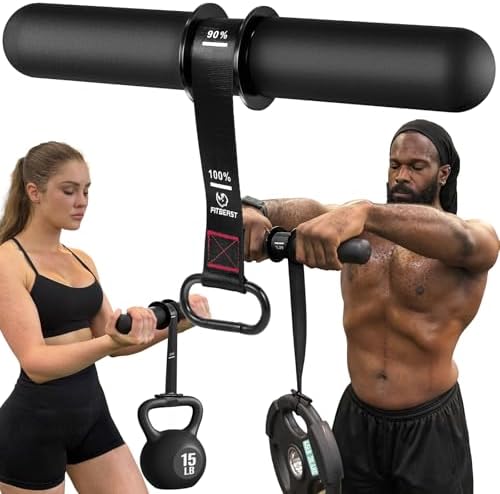
The FitBeast is a wrist-roller-style trainer designed to challenge grip and forearm strength. Its handles are described as 25% thicker than standard handles, which creates a more demanding grip. The included nylon strap adjusts for different loads and is specified to support up to 240 pounds; a 20.4-inch extension strap adds more setup options.
Unlike a compact spring device, this option is built around training with added weight. You can use it with dumbbells, kettlebells, or weight plates, so the training load depends on your setup. That makes it adaptable as your strength changes, but it also means you need a suitable weight and enough clear space to exercise safely.
The thicker handles may be useful if grip endurance is a priority, though they can make the movement harder to hold than a standard-size grip. The listing also mentions rehabilitation use, but this tool should not be treated as a substitute for medical advice or a clinician-guided plan, especially if you have pain or a diagnosed injury. Compared with the Sportneer, it offers a more load-based workout and requires more setup.
Pros:
- Thicker handles increase the grip challenge
- Adjustable strap supports different weight setups
- Includes a 20.4-inch extension strap for added flexibility
- Can be used with several types of weights
Cons:
- Requires a separate weight source and space for use
- Thicker handles may feel difficult for some users to hold
Verdict: Pick the FitBeast if you want a wrist roller that can be loaded to suit your training, and you are comfortable setting up weights and a strap.
LIZAAL Adjustable Forearm Trainer: A Portable All-Metal Option

The LIZAAL combines a grip-strength trainer and wrist exerciser in a compact device. Its continuously adjustable resistance knob lets you change the intensity, making it more flexible than the Sportneer’s listed fixed tension. The solid metal body is paired with silicone grip sleeves intended to provide a more secure, comfortable hold.
For tennis players, the adjustable resistance can make it easier to begin at a manageable level and progress gradually. The device targets the hands, wrists, and forearms, and its small format suits home, office, gym, or travel use. It is a convenient option for short training sessions, although it does not provide the loaded rotation movements of a plate-based bar.
The listing does not give specific resistance values, so you may need to adjust the knob by feel rather than follow a precise weight setting. Its all-metal construction may appeal if you prefer a sturdy-feeling tool, while the silicone sleeves add a softer contact surface. This is the most versatile choice here for adjustable resistance in a compact grip-style trainer.
Pros:
- Continuously adjustable resistance
- Metal body with silicone grip sleeves
- Compact for training in different settings
- Targets hands, wrists, and forearms
Cons:
- Specific resistance levels are not listed
- Does not provide the same weighted rotation setup as a wrist bar
Verdict: The LIZAAL is a strong fit if you want a portable grip and forearm trainer with adjustable resistance and do not need a plate-loaded tool.
Fitarc Forearm Training Bar: For Loaded Wrist Rotation

The Fitarc is a forearm training bar designed for wrist rotation, including pronation and supination, as well as wrist curls. It fits 2-inch Olympic plates, and a collar is included to secure the setup. The weight plates are not included, so you will need compatible plates to use it as intended.
This tool stands out because it focuses on rotational forearm movement rather than squeezing a grip or working against a spring. That can make it useful for adding a different movement pattern to a strength routine. For tennis players, it may complement racket practice, but the actual load and challenge depend on the plates you choose.
Because the bar uses external weight, start with a light load and use controlled movement rather than swinging through repetitions. The plate requirement makes this less convenient for travel or for someone without an existing weight setup. Compared with the FitBeast roller, it is more specifically described for wrist rotation and requires 2-inch plates.
Pros:
- Designed for pronation, supination, and wrist curls
- Fits 2-inch Olympic plates
- Includes a barbell collar
- Allows you to choose the training load with compatible plates
Cons:
- Weight plates are not included
- Requires a compatible plate setup and careful load selection
Verdict: Choose the Fitarc if wrist rotation is a priority and you already have compatible 2-inch plates.
Marcy Wrist and Forearm Developer: A Supported Rocking Trainer

The Marcy uses a supported rocking motion: rest your arm in the padded cradle, hold the handle, and move it back and forth. A resistance dial lets you change the challenge, while sliding grip adjustments help position the handle for different hand and arm lengths. The product description says the movement works both sides of the forearm and the fingers.
The forearm cradle is a practical difference from the handheld spring and grip options. It supports your arm during the exercise and can make it easier to focus on a controlled wrist movement. The trainer is designed for use on a desk, couch arm, or gym bench, so it can suit someone who wants a stable, stationary setup for short sessions.
Its larger supported design is less portable than a small hand-held exerciser, and the rocking motion is more limited than a plate-loaded bar for rotational work. The listed two-year limited warranty is an added consideration. Compared with the Sportneer, the Marcy offers a resistance dial and adjustable handle position, rather than a spring with a listed tension.
Pros:
- Padded forearm cradle supports the arm during exercise
- Resistance dial allows adjustments as you train
- Sliding grip can be positioned for hand and arm length
- Can be used on a desk, couch arm, or gym bench
Cons:
- Less compact than a handheld forearm trainer
- Focused on rocking movements rather than weighted wrist rotation
Verdict: The Marcy is a good choice if you prefer a supported, adjustable trainer for controlled wrist and forearm movements at home.
How to Choose a Forearm Strengthener for Tennis
Match the tool to the movement you want to train
Forearm strengtheners use different motions, so think about what you want to add to your routine. Spring and grip-style devices focus on squeezing or controlled wrist curls. Wrist rollers and training bars use external weight, while supported rocking trainers keep the forearm resting on a cradle. A tool is more useful when its movement suits your goals and feels comfortable to perform with control.
Consider how resistance changes
Some tools have adjustable resistance, while others rely on a listed tension or the weights you attach. A resistance dial can make gradual adjustments easier. With a plate-loaded tool, you choose the load, but you need compatible weights. Check whether a product adjusts its resistance itself or changes only the position of a pad or handle; those features do different jobs.
Look for a comfortable grip and stable setup
Grip shape, padding, and support can affect how comfortable a session feels. Thicker handles create a greater grip challenge, while padded cradles can support the forearm during a movement. If you have smaller hands, limited grip strength, or trouble holding a bulky handle, prioritize a device you can control without squeezing or straining excessively.
Check what equipment you already own
A compact spring trainer or hand-held adjustable device needs little setup. A wrist roller or training bar may require a separate weight source, and the Fitarc specifically fits 2-inch Olympic plates. Make sure you have the compatible equipment and a safe place to use it before choosing a load-based model.
Choose for your training space and routine
If you want to train at a desk or carry a tool in a gym bag, a compact device may be the most practical. A supported trainer takes up more room but offers a stable place to rest your arm. Consider where you will use the product and whether its setup is simple enough that you will use it regularly.
Use a gradual, controlled approach
Forearm exercises can feel demanding because the hands and wrists are involved in many everyday tasks. Start with low resistance and a manageable number of repetitions, then progress gradually if the movement remains comfortable. Stop if you feel pain. If you are dealing with ongoing wrist or elbow symptoms or returning from an injury, ask a qualified health professional for guidance before adding resistance training.
Frequently Asked Questions
Which type of forearm strengthener is most useful for tennis players?
There is no single best style for every player. A compact grip or spring trainer is convenient for basic wrist and forearm work, while a loaded roller or bar adds weight-based training. Choose based on the movement you want, your equipment, and what you can use with good control.
Can forearm training improve my tennis game?
Forearm training can help you work on grip and wrist strength, which are involved in holding and controlling a racket. A strengthener alone cannot guarantee better strokes or performance. Pair it with tennis practice and a balanced strength routine.
How often should I use a forearm strengthener?
Frequency depends on your current training load, recovery, and the resistance you use. Begin conservatively and allow time to recover, especially if you are also playing or practicing often. Reduce or stop training if you develop pain or lasting soreness.
Are wrist rollers better than spring-style exercisers?
They train in different ways. A wrist roller uses a strap and external load, while a spring-style tool provides resistance through its mechanism. A roller offers more control over added weight when you have the right setup; a spring trainer is usually simpler to pick up and use.
Do any of these products include weight plates?
The Fitarc listing specifically says weight plates are not included. The FitBeast is designed to work with weights such as dumbbells, kettlebells, or weight plates, so check the product listing and your equipment needs before ordering.
Can a forearm strengthener treat tennis elbow?
A strengthener should not be considered a treatment for tennis elbow or other pain. If you have persistent symptoms, consult a qualified health professional for an assessment and an appropriate plan before using a resistance device.
Final Recommendation
For a simple, compact option, the Sportneer provides a straightforward spring-based approach, while the LIZAAL offers adjustable resistance in a portable format. Choose the FitBeast or Fitarc if you want to train with added weight and have a suitable setup. If you prefer a supported arm position and a resistance dial, the Marcy is the more specialized pick. Whichever tool you choose, start light, use controlled movements, and make comfort a priority.