
Disclosure: As an Amazon Associate I earn from qualifying purchases. Learn more
A tennis elbow brace can help reduce strain on the forearm tendons during sports, workouts, or repetitive daily tasks. The right choice depends on where you need support, how much adjustability you want, and whether you prefer a slim strap or a fuller compression sleeve. These picks include adjustable counterforce straps, a sleeve-style option, and a two-pack; they provide support, but they are not a substitute for medical advice or treatment.
Quick Comparison
| Brace | Style | Standout feature | Best suited for |
|---|---|---|---|
| Sleeve Stars Tennis Elbow Brace | Adjustable counterforce strap | Three straps for different compression levels | People who want several fit options |
| Gviipk Tennis Elbow Brace | Buckle-and-pad strap | Pressure warning design | People who want a fine-tuned fit |
| APOYO Elbow Brace | Compression sleeve with strap | Moisture-wicking knit fabric | All-day wear and broader coverage |
| FREETOO Tennis Elbow Brace | Lightweight counterforce strap | Detachable gel pad | Sports and everyday use |
| CAMBIVO Tennis Elbow Brace Strap | Adjustable counterforce strap | Two-pack with EVA compression pad | Keeping a spare brace or sharing |
Our Picks: Best Tennis Elbow Braces for Men reviews
1. Sleeve Stars Tennis Elbow Brace: Most Adjustable Fit

The Sleeve Stars brace is an adjustable counterforce strap designed to sit around the forearm. Its listing says it fits arm measurements from 9 to 23 inches and includes three straps in different lengths, giving you more options for adjusting the fit and compression than a basic one-strap design.
Hook-and-loop closures make it straightforward to put on and adjust. The brace is made for use during activities such as tennis, golf, and volleyball, as well as repetitive work. Its breathable material and strap format may appeal if you want targeted support without wearing a full sleeve.
The main tradeoff is that this design relies on careful placement and tension: too loose, and it may shift; too tight, and it may feel uncomfortable. Check your measurement and adjust it gradually rather than pulling the strap as tight as possible. Compared with the sleeve-style APOYO, this is the more focused, adjustable option.
Pros:
- Three strap lengths offer different fit and compression options.
- Listed to fit a wide range of arm measurements.
- Adjustable hook-and-loop closure is easy to fine-tune.
- Designed for sports and everyday activities.
Cons:
- Requires correct placement over the forearm to feel supportive.
- Does not provide the broader coverage of a compression sleeve.
Verdict: Choose Sleeve Stars if you want an adjustable strap with multiple sizing options and prefer targeted support over a full sleeve.
2. Gviipk Tennis Elbow Brace: A Fine-Tunable Buckle Strap

Gviipk combines a buckle, hook-and-loop adjustment, and a silicone pad in a low-profile forearm strap. The design is meant to apply pressure around the forearm, and the listing describes a pressure warning area that changes color when the strap is pulled too tight. Treat that feature as a visual cue, not a substitute for a comfortable fit.
The product also includes two-way elastic fabric and a built-in support plate. Its thin, breathable construction may suit people who want a strap that stays close to the arm during activities such as tennis, golf, badminton, or weightlifting. The buckle offers another way to adjust tension beyond simply tightening a strap.
As with any counterforce brace, the pad needs to sit in the right place, and the strap should not cause numbness, tingling, or increased discomfort. The product details do not give a specific measurement range, so check the current listing for fit information if your forearm is especially small or large. Compared with FREETOO, this model emphasizes its pressure-warning design rather than a detachable gel pad.
Pros:
- Buckle and hook-and-loop closure allow fit adjustments.
- Silicone pad is designed to distribute pressure.
- Thin, breathable fabric is intended for active use.
- Includes a visual pressure-warning feature.
Cons:
- The supplied product details do not specify a measurement range.
- More features may mean a little more adjustment than a basic strap.
Verdict: Gviipk is worth considering if you want a buckle-adjusted strap and a built-in visual cue for checking pressure.
3. APOYO Elbow Brace: A Sleeve for More Even Coverage
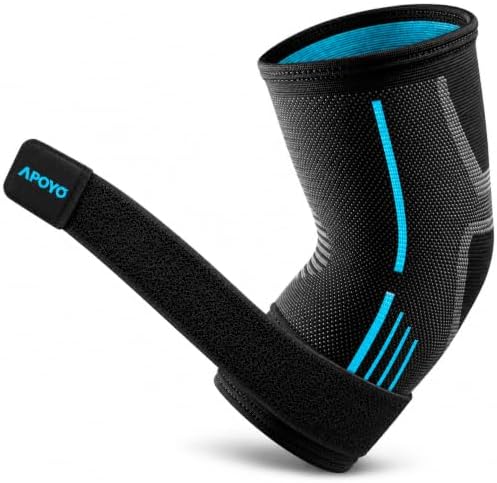
Unlike the narrow straps in this guide, the APOYO is a compression sleeve with an adjustable strap. Its knit fabric is described as breathable and moisture-wicking, while the added strap lets you customize the level of compression. This combination may be useful if you prefer support spread over a larger area rather than pressure from a small pad.
The sleeve format is designed for sports and regular daily wear. The product is offered in a Large size in the supplied listing, so check the sizing information before ordering rather than assuming it will fit every forearm. The knit construction may also feel different from the more structured, buckle-based straps on this list.
A sleeve can offer broader coverage, but it may take more effort to pull on and position than a simple strap. It is also less focused than a counterforce pad if your preference is pressure at one specific point. Compared with Sleeve Stars, APOYO is the better match for shoppers who want a sleeve-style feel and adjustable compression in one design.
Pros:
- Sleeve design provides broader coverage than a narrow strap.
- Moisture-wicking knit fabric is intended for all-day comfort.
- Adjustable strap allows you to change compression.
- Designed for several sports and everyday wear.
Cons:
- The supplied option is Large, so sizing should be checked carefully.
- A sleeve may be less convenient to put on than a simple strap.
Verdict: Pick APOYO if you prefer a breathable compression sleeve with an adjustable strap and want coverage beyond a small forearm pad.
4. FREETOO Tennis Elbow Brace: Lightweight Strap with Gel Pad

FREETOO is a counterforce strap with a detachable gel pad. The pad is intended to focus pressure on the forearm muscle, while the overlapping buckle and silicone-pad design is meant to add support. The listing gives the brace a weight of 70 grams and describes it as lightweight for sports and daily tasks.
The strap is made from nylon, and its adjustment system lets you set the tension to suit your comfort. The removable pad may be useful if you want to reposition it or prefer a simpler feel for certain activities. The product is described for use with tennis, golf, pickleball, weightlifting, and other sports.
Like other targeted straps, FREETOO depends on placement and fit; it is not a full compression sleeve. The listing does not provide an arm measurement range, so check the product page before buying if sizing is a concern. Compared with Gviipk, its clearest distinction is the detachable gel pad and stated lightweight construction.
Pros:
- Detachable gel pad can be repositioned or removed.
- Lightweight design is listed at 70 grams.
- Adjustable buckle strap suits sports and everyday use.
- Nylon construction is designed to fit closely around the arm.
Cons:
- The supplied product details do not give a fit measurement range.
- Targeted pad support may not suit those who prefer a full sleeve.
Verdict: FREETOO is a good option to compare if a lightweight strap and removable pad matter more to you than sleeve coverage.
5. CAMBIVO Tennis Elbow Brace: Two Straps for Home and Gym

This CAMBIVO option is a two-pack of adjustable counterforce straps, each with a contoured EVA compression pad. The product listing gives a forearm fit range of 10.5 to 15 inches and describes the fabric as moisture-wicking. A single adjustable strap lets you change the compression for different activities.
Having two braces can be practical if you want one at home and another in a gym bag, or if you want to share the set. The low-profile design is intended to fit under sleeves, and the listing states that the product includes a two-year warranty. Check the warranty terms and fit range on the current listing before purchasing.
The specified fit range is narrower than the 9-to-23-inch range listed for Sleeve Stars, so this is not the best pick if you need more sizing flexibility. Its one-strap design is simple, but it does not have the buckle or detachable-pad features found on some other options. The extra brace is its main advantage for people who want a spare.
Pros:
- Two braces are included in the pack.
- Contoured EVA pad is designed for targeted compression.
- Low-profile design is intended to fit beneath clothing.
- Listing states a two-year warranty.
Cons:
- Listed fit range is 10.5 to 15 inches, so it may not suit every forearm.
- Does not include the buckle or removable-pad features of some alternatives.
Verdict: Choose CAMBIVO if the two-pack is useful to you and your forearm measurement falls within its listed range.
How to Choose a Tennis Elbow Brace
Decide between a strap and a sleeve
A counterforce strap sits around the forearm and uses a pad or shaped area to apply focused pressure. It may suit you if you want a compact brace that is easy to adjust around a specific spot. A sleeve covers more of the arm and can feel more like general compression. Think about which style you find comfortable and practical for the tasks you do most.
Check the fit range and measure your arm
Do not assume that a brace labeled one-size-fits-most will fit your arm. Measure where the product instructions say to measure, then compare that number with the listed range. The options here vary: Sleeve Stars lists a 9-to-23-inch fit range, while CAMBIVO lists 10.5 to 15 inches. If a product’s supplied details do not give a range, check its listing before ordering.
Look for simple, controllable adjustment
A brace should feel secure without being painfully tight. Hook-and-loop straps are quick to adjust, while buckles may offer another way to control tension. Some designs include more than one strap or a pressure indicator. Choose the adjustment style you can set consistently, and loosen or remove the brace if it causes numbness, tingling, or more pain.
Consider pad placement and coverage
Counterforce braces work by applying pressure around the forearm, so the pad’s position matters. A removable pad may give you more flexibility, while a contoured pad is designed to sit in a set position. A sleeve spreads coverage over a larger area but may not offer the same focused feel. Follow the product’s fitting instructions rather than guessing at placement.
Match the material to your routine
If you plan to wear a brace while exercising or working, consider whether you prefer breathable fabric, a lightweight strap, or a sleeve. A slim strap may be easier to wear under clothing, while a sleeve can cover more of the arm. Product descriptions can help you compare materials, but comfort is personal, so use the return and warranty details available on the listing when making your choice.
Use the brace as support, not a cure
A brace may help you manage discomfort during activity, but it does not identify the cause of your symptoms or guarantee recovery. Follow any guidance from a healthcare professional, and avoid using a brace to push through worsening pain. If discomfort persists, gets worse, or limits your daily activities, seek medical advice.
Frequently Asked Questions
How does a tennis elbow brace work?
Many tennis elbow braces use a strap or pad around the forearm to apply pressure near the tendons. This can change how strain is distributed during movement. Fit and placement matter, and a brace should not cause numbness, tingling, or added pain.
Should I choose a strap or a compression sleeve?
A strap offers more focused support and is usually less bulky. A sleeve covers a larger area and may suit you if you prefer broader compression. The best choice depends on your comfort, fit, and intended use.
Can I wear a tennis elbow brace while playing sports?
The products in this guide are described for sports such as tennis, golf, volleyball, and weightlifting. Make sure the brace stays secure without restricting movement or circulation. Stop using it if it causes discomfort or makes your symptoms worse.
How tight should an elbow brace be?
It should feel secure, not painfully tight. Follow the manufacturer’s fitting directions and adjust the strap gradually. Remove or loosen it if you notice numbness, tingling, skin irritation, or increased pain.
Can I wear a brace all day?
Some products are described for extended or everyday wear, but comfort and individual needs vary. Follow the product instructions and any advice from your healthcare professional. Check your skin and take the brace off if it causes irritation or discomfort.
Will a tennis elbow brace cure the problem?
A brace is a support aid, not a guaranteed cure. It may help you manage strain during certain activities, but ongoing or worsening symptoms should be discussed with a healthcare professional.
Final Recommendation
For a versatile adjustable strap with a broad stated fit range, Sleeve Stars is the strongest starting point. Choose APOYO if you prefer a sleeve, FREETOO if a lightweight strap with a detachable pad appeals to you, or CAMBIVO if you want a two-pack and fit its listed measurement range. Gviipk is another option if you value buckle adjustment and its pressure-warning design. Whichever you choose, prioritize a comfortable fit and get medical guidance for persistent or worsening pain.