
Disclosure: As an Amazon Associate I earn from qualifying purchases. Learn more
Advanced junior players usually need a racket that fits their size and lets them keep building sound technique—not simply the most powerful frame they can swing. The five options below are all junior-length rackets, but they differ in construction, features, and intended player. Several are aimed at beginners or developing players, so check the fit and performance level carefully before choosing one for a tournament-ready junior.
Quick Comparison
| Racket | Length | Key features | Best fit |
|---|---|---|---|
| HEAD Speed 25 Junior Tennis Racquet | 25 in | Aluminum frame; 240 g; 105 sq in head | Developing players ages 8–10 |
| HEAD IG Speed Jr 25 Tennis Racquet | 25 in | Graphite composite; Innegra; Damp Plus; 100 sq in head | Juniors moving toward performance play |
| Wilson Pro Staff Precision Junior 21 | 21 in | Aluminum; perimeter weighting; pre-strung | Young beginners ages 5–6 |
| Wilson Blade Feel Comp Junior 25 | 25 in | Fiberglass and aluminum; moisture-absorbing grip | Developing players ages 9–10 |
| Wilson Ultra 25 V5 Junior Performance | 25 in | Crush Zone grommets; SI3D frame design | Juniors seeking a power-oriented frame |
Our Picks: Best Kids Tennis Rackets for Advanced Juniors reviews
HEAD Speed 25: A Forgiving Frame for Developing Technique
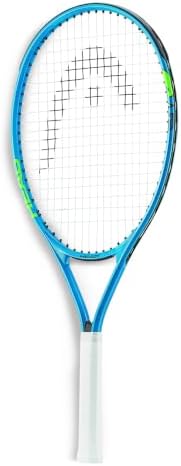
The HEAD Speed 25 is a pre-strung junior racket built around a durable aluminum frame. Its 25-inch length and 105-square-inch head give young players a manageable reach and a relatively generous hitting area. The listed weight is 240 grams, and the grip measures 3 7/8 inches.
HEAD positions this model for children learning the game, especially players ages 8–10 and about 50–55 inches tall. The larger head may be forgiving when a developing player does not hit the ball in the center every time. However, the aluminum construction and beginner-focused design make it a better fit for learning and casual play than for a technically advanced junior seeking a more performance-oriented frame.
Compared with the HEAD IG Speed Jr, this racket has a larger listed head and a stated weight, while the IG model uses graphite composite and includes vibration-management features. Choose the Speed 25 if simple handling and a forgiving head matter more than moving toward a performance frame.
Pros:
- Pre-strung and ready to use
- Large 105-square-inch head offers a forgiving hitting area
- Aluminum frame is designed for durability
- Grip size and length are specified for easier fit checks
Cons:
- Designed for beginners and casual junior players, not advanced competition
- Aluminum construction may be less appealing than a composite frame for players seeking a performance step-up
Verdict: Pick the HEAD Speed 25 for a younger player who still benefits from a forgiving, easy-to-manage racket, but look at the IG Speed Jr or a more advanced frame for a junior with established technique.
HEAD IG Speed Jr 25: The Most Performance-Oriented HEAD Option

The HEAD IG Speed Jr is a 25-inch racket for players ages 8–10. Its graphite-composite construction is a step away from the aluminum build of the HEAD Speed 25. The listed features include Innegra technology for stability and vibration reduction, plus a Damp Plus insert intended to isolate impact before it reaches the handle.
A 100-square-inch head and 16×19 string pattern are specified as a balance of control and accessible power. Those details make this the clearest fit among the five for a junior beginning to move toward performance play. Still, the product is described as an ideal first performance racket, so highly advanced players may outgrow its junior length or want different specifications.
The main trade-off is fit: its age guidance is not a substitute for checking the player’s height, strength, and swing. Compared with the aluminum HEAD Speed 25, the composite construction and listed comfort features make it the more performance-focused choice, though the Speed 25 has the larger head.
Pros:
- Graphite-composite construction
- 100-square-inch head and 16×19 string pattern
- Innegra and Damp Plus features are designed to improve stability and comfort
- Positioned as a first performance racket
Cons:
- Still intended for juniors ages 8–10, so it may be too short for some experienced players
- Listed specifications do not include its weight or grip size
Verdict: The HEAD IG Speed Jr is the strongest match here for a developing junior stepping up from a basic aluminum racket, provided its 25-inch length suits the player.
Wilson Pro Staff Precision Junior 21: A Starter Racket for Small Players

The Wilson Pro Staff Precision Junior is a 21-inch, pre-strung racket designed for ages 5–6. Its aluminum AirLite Alloy frame is described as durable and lightweight, while a perimeter weighting system adds frame volume at the 3 and 9 o’clock positions. Wilson also lists C Beam geometry as a way to support stability and power.
Those features may help a young beginner manage the racket while learning basic strokes. But its short length and stated age range make it a poor fit for most advanced juniors. A longer racket is usually needed as a child grows, so do not choose this model just because it carries a name inspired by Wilson’s Pro Staff collection.
Among these picks, it is the most clearly aimed at very young learners. It is not a direct alternative to the 25-inch options; its purpose is to suit a smaller player who needs a shorter frame.
Pros:
- Pre-strung for a simple start
- 21-inch length is designed for young children
- Aluminum frame is built for lightweight strength
- Perimeter weighting is intended to improve stability
Cons:
- Too short for most advanced junior players
- Best for ages 5–6, not older juniors developing a competitive game
Verdict: Consider this Wilson only for a small child just starting tennis; it is not the right choice for an advanced junior.
Wilson Blade Feel Comp Junior 25: A Control-Inspired Choice for Developing Players

The Wilson Blade Feel Comp Junior is a 25-inch racket aimed at developing players around ages 9–10. Its fused fiberglass-and-aluminum construction is described as a blend of playability and control. The perforated grip is designed to absorb moisture, which may be useful during longer practice sessions.
The model draws inspiration from Wilson’s Blade performance collection, but its junior construction and intended age range matter more than the family name. The supplied details do not include its weight, head size, or string pattern, so you have less specification information to compare it with the HEAD IG Speed Jr.
The product data lists this racket as unavailable, so its listing may not offer a purchase option at the time you check. If it is available, compare its fit and specifications with the player’s current racket before choosing it for serious match play.
Pros:
- 25-inch length for developing junior players
- Fiberglass-and-aluminum construction
- Perforated grip is designed to absorb moisture
- Control-focused design inspiration
Cons:
- Listed as unavailable in the supplied product data
- Weight, head size, and string pattern are not provided
Verdict: The Blade Feel Comp Junior may suit a developing player who wants a 25-inch frame, but check availability and confirm the missing specifications before considering it for advanced play.
Wilson Ultra 25 V5: A Power-Focused Junior Frame

The Wilson Ultra 25 V5 is presented as a junior performance racket. Its listed Crush Zone grommet system compresses at impact to create a larger hotspot and increase ball dwell time on the strings. The product description says that can support feel and power. SI3D is described as optimizing frame bending for power, spin, and control, while the Click-and-Go bumper and grommet system is intended to improve durability and fit.
The feature set sounds more performance-focused than the basic aluminum rackets in this group. However, the supplied details do not state the racket’s weight, head size, grip size, or construction material. That makes it harder to judge whether it will suit a particular advanced junior or compare it directly with the HEAD IG Speed Jr.
The product data lists this model as unavailable, so check the listing before planning to buy it. If you can find it, confirm the missing fit specifications and ask the player’s coach whether a power-oriented 25-inch racket suits the player’s current stage.
Pros:
- Junior performance design
- Crush Zone system is intended to support a larger hitting hotspot and ball dwell time
- SI3D design targets power, spin, and control
- Click-and-Go system is designed to improve bumper and grommet durability
Cons:
- Listed as unavailable in the supplied product data
- Important fit details, including weight and head size, are not provided
Verdict: The Ultra 25 V5 is worth considering if it is available and its fit checks out, but the missing specifications make it harder to recommend over the better-documented HEAD IG Speed Jr.
How to Choose a Tennis Racket for an Advanced Junior
Match the Length to the Player, Not Just Their Age
Junior rackets are not one-size-fits-all. A 21-inch frame like the Wilson Pro Staff Precision Junior is designed for very young children, while the other models here are 25 inches long. Use your child’s height, reach, strength, and ability to swing comfortably as fit clues, and ask a coach to help assess whether a junior frame is still appropriate.
Look Beyond the Product Name
Names such as “Pro Staff,” “Blade,” and “performance” may refer to a product family or design inspiration, but they do not make every junior racket suitable for tournament-level play. Check the actual construction and specifications. In this group, the HEAD IG Speed Jr lists graphite-composite construction, a 100-square-inch head, and a 16×19 string pattern; other models provide fewer details.
Choose a Frame That Supports the Player’s Current Technique
A larger head can offer a more forgiving hitting area, while a smaller or more control-focused setup may suit a player who consistently centers the ball. The HEAD Speed 25 has a 105-square-inch head and is designed for learning, while the HEAD IG Speed Jr has a 100-square-inch head and is described as a first performance racket. A coach can help decide whether the player is ready for a less forgiving frame.
Consider Weight and Swing Comfort
A racket should feel manageable through a full practice, including serves and repeated groundstrokes. The HEAD Speed 25 lists a weight of 240 grams, but the supplied details do not give the weight for the other models. If the player tires quickly, struggles to prepare the racket, or changes their swing to handle it, reassess the fit rather than assuming a heavier or more advanced model is better.
Think About Construction and Comfort Features
The HEAD Speed 25 and Wilson Pro Staff Precision Junior use aluminum-based construction. The HEAD IG Speed Jr uses graphite composite and lists Innegra and Damp Plus features designed to address stability and vibration. The Wilson Blade Feel Comp combines fiberglass and aluminum, while the Ultra 25 V5 lists frame and grommet technologies. Treat these as design details, not a guarantee that one racket will feel better for every player.
Check the Grip and Other Missing Specifications
A grip that is too large or too small can make it harder to hold the racket comfortably. The HEAD Speed 25 and HEAD IG Speed Jr list a 3 7/8-inch grip, but the supplied information does not state grip size for the other choices. Check the full product listing or ask a coach before ordering, especially if the junior has already settled into a preferred grip size.
Ask Whether a Junior Frame Is Still the Right Step
Advanced juniors grow and develop at different rates. Some may still need a junior-length racket, while others may be ready to move to a longer frame. Since every model in this roundup is 25 inches or shorter, the selection may not fit a larger or stronger player. Use the coach’s guidance and the player’s ability to swing safely and comfortably to decide when to move up.
Frequently Asked Questions
Which racket in this group is the best fit for an advanced junior?
The HEAD IG Speed Jr is the clearest performance-oriented option in the supplied specifications. It has graphite-composite construction, a 100-square-inch head, and a 16×19 pattern, but it is still described as a first performance racket for ages 8–10. A more advanced or larger junior may need a different size or level of racket.
Are these rackets all suitable for competitive juniors?
No. The Wilson Pro Staff Precision Junior 21 is designed for ages 5–6, and the HEAD Speed 25 is described for learning and casual play. The HEAD IG Speed Jr and Wilson Ultra 25 V5 have more performance-focused features, but each is still a 25-inch junior model. Check with the player’s coach before choosing one for competition.
How do I know if a 25-inch racket is the right size?
Age can offer a starting point, but it does not settle the question. Consider the player’s height, reach, strength, and ability to swing the racket without strain. A coach or qualified tennis professional can help confirm whether 25 inches is appropriate.
What is the difference between the HEAD Speed 25 and HEAD IG Speed Jr?
The Speed 25 is an aluminum racket with a 105-square-inch head and a listed weight of 240 grams. The IG Speed Jr uses graphite composite, has a 100-square-inch head and a 16×19 pattern, and lists Innegra and Damp Plus features. The Speed 25 is aimed at learning, while the IG model is positioned as a first performance racket.
Do these junior rackets come pre-strung?
The product details explicitly say the HEAD Speed 25 and Wilson Pro Staff Precision Junior 21 come pre-strung. The supplied descriptions do not confirm stringing for the other models, so check their listings before buying.
Are the Wilson Blade Feel Comp Junior and Ultra 25 V5 available?
The supplied product data lists both as unavailable. Availability can change, so check the linked listings for current status before making a decision.
Final Recommendation
For a junior who is moving beyond basic instruction, the HEAD IG Speed Jr is the most compelling option in this group based on its graphite-composite construction and stated performance features. The HEAD Speed 25 is a sensible learning racket, while the Wilson Pro Staff Precision Junior 21 is only for much younger beginners. The Wilson Blade Feel Comp Junior and Ultra 25 V5 have potentially useful features, but the supplied data lists them as unavailable and leaves important fit details unspecified. Most importantly, confirm that a 25-inch racket is still the right size for your child before buying.