
Disclosure: As an Amazon Associate I earn from qualifying purchases. Learn more
A tennis swing weight is a removable metal attachment that adds resistance to a racket during warm-ups or swing drills. The options here range from adjustable sets with three weights to simple 100-gram models. A lighter setting can be a more manageable place to begin, while a heavier one adds more resistance—but extra weight is not a shortcut to better technique. Choose a tool that fits your training plan, and check the listing for current availability and racket fit before ordering.
Quick Comparison
| Product | Weight options | Material | Best for |
|---|---|---|---|
| Topyond Adjustable Tennis Racket Swing Weight | 25g, 50g, 100g | Steel | Choosing among three resistance levels |
| Jwthee Tennis Racket Weight Trainer, Three-Piece Set | 25g, 50g, 100g | Steel | Players who want several training stages |
| Jwthee 100g Tennis Racket Weight Training Device | 100g | Steel | Players who want one fixed weight |
| POWERTI Tennis Racket Swing Weight Training Aid | 25g, 50g, 100g | Steel | Warm-ups with a choice of weights |
| Demeras 100g Tennis Racket Swing Practice Weight | 100g | Steel | A simple, single-weight option |
Our Picks: Best Tennis Swing Weights reviews
1. Topyond Adjustable Tennis Racket Swing Weight: Best for Three Resistance Levels

The Topyond is a steel racket-weight training aid offered in 25-gram, 50-gram, and 100-gram options. That gives you more flexibility than a single-weight tool: you can select an amount of resistance for a short warm-up or a controlled swing drill rather than committing to one load.
The listed design attaches to both sides of the racket and is intended for use before practice or matches. The product description also highlights adjustable racket balance. How that feels will depend on the weight you choose and where it sits on your particular racket, so treat balance changes as something to assess carefully rather than an automatic technique fix.
Its main advantage over the two single-weight choices below is the ability to choose among three weights. The trade-off is that the heaviest option adds a substantial 100 grams, which may feel demanding for repeated swings. Start with the lightest option if you are unsure, and stop if the added load causes discomfort or changes your swing in a way you cannot control.
Pros:
- Three listed weight options: 25g, 50g, and 100g
- Steel construction
- Designed to attach to both sides of a racket
- Useful for players who want to vary resistance
Cons:
- The 100g option may be too heavy for some players or drills
- The listing does not specify which racket models it fits
Verdict: Choose the Topyond if you want three resistance options in one training setup, but begin with a lighter weight and confirm fit before buying.
2. Jwthee Three-Piece Tennis Racket Weight Trainer: Best for Gradual Progression

This Jwthee set includes three steel weights: a 25-gram green model, a 50-gram orange model, and a 100-gram black model. The listed measurements vary by weight, and the description gives an approximate tolerance of plus or minus 3 grams. Its range makes it possible to choose a different load for different drills or training stages.
The attachment is described as fastening to both ends of a racket. That setup is intended to add weight and adjust the racket’s balance for swing practice or a warm-up. The product description suggests that removing the weight may make the racket feel quicker, but that sensation is not a guaranteed improvement in on-court swing speed or results.
Compared with Jwthee’s 100-gram-only option, this set is more adaptable and gives you a lighter starting point. On the other hand, the several-piece format may be more than you need if you have already decided on one resistance level. Check the listing’s fit information and make sure each attachment is secure before swinging.
Pros:
- Includes 25g, 50g, and 100g options
- Steel construction and stated weight tolerances
- Allows you to adjust resistance between drills
- More flexible than a single-weight model
Cons:
- The 100g attachment may feel excessive for some users
- Specific racket compatibility is not provided in the supplied details
Verdict: The Jwthee three-piece set is a sensible choice if you want to compare light, medium, and heavy resistance rather than train with only one fixed load.
3. Jwthee 100g Weight Training Device: Best for a Fixed Heavy Load

This Jwthee model is a single 100-gram steel training weight. It is designed to attach to both ends of a racket for swing practice or a pre-match warm-up. Unlike the adjustable sets, it does not offer lighter 25-gram or 50-gram choices, so the load is fixed.
A single-weight design can suit players who already know they want to train with this amount of added weight. The product description says the device is meant to support arm-strength work and swing practice. Those are stated uses, not a guarantee that it will improve power, stability, or muscle memory. If you are new to weighted swings, the lack of a lighter setting is an important limitation.
Compared with the other Jwthee model in this list, this one is simpler but less versatile. It may be a better fit if you prefer a single training load and do not need to adjust resistance. Because the supplied details do not name compatible racket models, check the attachment dimensions and fit information before purchasing.
Pros:
- Simple, fixed 100g weight
- Steel construction
- Designed for swing practice and warm-ups
- Attaches to both ends of the racket, according to the listing
Cons:
- No lighter weight options are listed
- A 100g increase may be demanding for frequent or extended swings
Verdict: Pick this Jwthee model only if a fixed 100-gram load matches your training needs; for more control over resistance, choose a three-weight set.
4. POWERTI Tennis Racket Swing Weight Aid: Best for Choice of Warm-Up Load
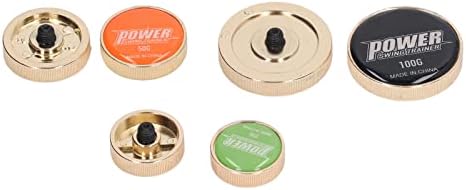
This steel swing-weight aid is listed with 25-gram, 50-gram, and 100-gram options. It is intended for warm-ups and swing exercises, with the attachment described as screwing onto both sides of a racket. Having three choices makes it easier to select a lighter load than a fixed 100-gram device.
The description says the weight can change the racket’s balance and may help players focus on their swing motion. Keep expectations measured: adding weight changes how the racket feels, but it does not correct technique on its own. Use controlled swings and choose a load that lets you maintain a smooth motion.
This option is similar in function to the Topyond and Jwthee three-piece sets. The supplied information does not provide measurements or specific racket-fit details, so compare those points on the product listing before ordering. It is most suitable for a player who wants several weight choices for short, deliberate practice sessions.
Pros:
- Three stated choices: 25g, 50g, and 100g
- Steel construction
- Designed for warm-ups and swing practice
- Offers more flexibility than a fixed 100g weight
Cons:
- The supplied details do not list dimensions or racket compatibility
- The 100g option may add more resistance than some players want
Verdict: Consider the POWERTI aid if you want several resistance levels for warm-ups, and verify the fit details before committing.
5. Demeras 100g Tennis Racket Weight: Best for a Simple Single-Weight Setup

The Demeras is a black, 100-gram steel weight designed to screw onto both sides of a tennis racket. The listing describes it as a tool for warm-ups and swing practice. Its straightforward setup may appeal if you do not need multiple resistance levels.
There is no lighter option listed, so you cannot step up from 25 grams or 50 grams with this model. That makes it less flexible than the three-weight products above, and the added load may be more than some players want for repeated swings. Use it only for controlled practice, and check that it attaches securely to your racket.
The description mentions changing racket weight and balance, but it does not provide further details about dimensions or fit. Compared with other 100-gram options in this roundup, the Demeras has a similar basic purpose and listed load. Your choice may come down to the listing details and whether a fixed 100-gram attachment suits your training.
Pros:
- Simple single-weight design
- Listed as 100g
- Steel construction
- Designed to attach to both sides of a racket
Cons:
- No lighter or adjustable weights are listed
- Specific racket fit and dimensions are not supplied here
Verdict: The Demeras may suit players who want a basic 100-gram training weight, but an adjustable set is the safer choice if you are unsure how much resistance you need.
How to Choose a Tennis Swing Weight
Pick a weight you can control
The products in this guide offer either 25g, 50g, and 100g choices or a fixed 100g load. More weight means more resistance, but it can also make your normal swing harder to maintain. If you are new to this type of training, an adjustable model lets you start with less added weight. Avoid choosing a heavy option just because it sounds more challenging.
Decide whether you need one weight or several
A fixed 100-gram model is simple if you already know that this load suits your drills. An adjustable set gives you more room to change resistance between sessions or practice goals. It is also useful if more than one player will use the training aid. Consider whether you will actually use the extra options before paying for a set.
Check how the attachment fits your racket
The listed products are described as attaching to both sides or ends of a racket, but the supplied details do not give a full compatibility list. Check the product page for dimensions, attachment instructions, and fit guidance for your racket. Do not assume that a screw-on design fits every frame.
Think about balance as well as total weight
Adding weight can change how a racket feels in your hand, including its balance. That change may affect your swing, so keep your movements controlled and pay attention to comfort. A training aid should not force you into an awkward motion or replace instruction from a qualified coach if you are working on a technical issue.
Use it for a clear training purpose
These products are described as warm-up and swing-practice aids. They are not substitutes for hitting with a regular racket or a structured strength program. Decide whether you want a short warm-up, a controlled swing drill, or a way to add resistance to practice. Follow the product instructions, secure the attachment before use, and stop if you feel pain or strain.
Set realistic expectations
Product descriptions may suggest improved strength, swing speed, stability, or muscle memory, but a weighted attachment cannot promise those outcomes. Your results depend on how you use it, your technique, and your broader training. A heavier racket may feel easier to swing after removing the attachment, but that temporary contrast is not proof of lasting speed gains.
Frequently Asked Questions
What is a tennis swing weight used for?
It is a removable weight attached to a racket for swing practice or a warm-up. The added resistance changes how the racket feels while you swing. These products are not intended to replace regular racket practice.
Which weight should a beginner choose?
If you are new to weighted swing drills, consider an adjustable model and begin with its lightest option. Choose a load that lets you keep a controlled, comfortable motion. A fixed 100-gram model does not provide that lighter starting point.
Will a swing weight make my racket swing faster?
Not necessarily. Some product descriptions claim the racket may feel faster after you remove the attachment, but that effect is not guaranteed to improve your on-court swing speed or performance.
Can I hit tennis balls with a swing weight attached?
The supplied product details describe these tools for warm-ups and swing practice, not as attachments for hitting balls. Follow the specific product instructions and use the weight only for its stated purpose.
Do these weights fit every tennis racket?
The supplied information does not confirm universal compatibility. Check the listing for dimensions and fit instructions, and make sure the attachment is secure before swinging.
Should I choose an adjustable set or a fixed 100g model?
Choose an adjustable set if you want to try different loads or start light. A fixed 100-gram model makes more sense if you already know that amount suits your training and do not need other options.
Final Recommendation
For most players who are deciding how much resistance they need, an adjustable set is the more flexible choice. The Topyond, Jwthee three-piece set, and POWERTI aid each list 25-gram, 50-gram, and 100-gram options. If you already prefer a fixed 100-gram load, the Jwthee or Demeras single-weight model keeps things simple. In every case, check racket fit, begin with controlled swings, and treat claimed training benefits as possibilities—not guarantees.