
Disclosure: As an Amazon Associate I earn from qualifying purchases. Learn more
For a heavier tennis player, every landing and change of direction can put extra demands on an insole. The right choice depends on what you need most: steadier support during lateral movement, softer impact cushioning, or a firmer feel underfoot. These four options vary widely in design, so check your shoe fit and support needs before choosing. An insole can improve comfort, but it cannot make an ill-fitting shoe or an existing foot injury safe to play in.
Quick Comparison
| Insole | Best for | Support style | Key consideration |
|---|---|---|---|
| GED Court Sports Insoles | Side-to-side court movement | Mid-to-high arch and reinforced outer edges | Listed size is approximately men’s 9–11.5 |
| Goofort 3D-Xpain-Max Gel Insoles | Soft cushioning for general use | Firm and soft gel zones | Designed for varied activities, not specifically court play |
| MARRDO Carbon Fiber Insoles | A firmer, more rigid underfoot feel | Full-length carbon plate with cushioning pads | Rigid construction may not suit every player |
| Meltonian Player Contour PU Foam Insoles | Everyday cushioning and arch contour | Contoured PU foam | Less specialized for aggressive lateral court movement |
Our Picks: Best Insoles for Heavy Tennis Players reviews
GED Court Sports Insoles: Best for Lateral Court Support

The GED Court Sports Insoles are the most tennis-specific option in this group. They are designed for quick lateral steps, sudden stops, and direction changes, which makes their support layout relevant to players who feel unstable when pushing off or recovering across the court.
The design combines mid-to-high arch support with reinforced outer edges and a raised pad at the outer forefoot. That extra structure may appeal if your main concern is feeling planted during side-to-side movement. Targeted cushioning aims to soften impact without making the footbed feel overly bulky, though your own sense of court feel will depend on your shoes and preferences.
These insoles are trimmable and intended to replace the shoe’s original footbed. The listed size is size L, approximately US men’s 9–11.5; check the product listing for fit details before ordering. The description notes that a short break-in period is normal. Compared with the other options here, this is the clearest pick for court-specific stability, but its arch shape may not suit every foot.
Pros:
- Designed around tennis and other court sports
- Outer forefoot pad targets lateral push-offs
- Reinforced edges and mid-to-high arch support
- Trimmable to fit the shoe
Cons:
- The listed size range may not fit every shoe size
- Mid-to-high arch support may feel too pronounced for some feet
Verdict: Choose the GED if lateral stability during tennis is your priority and the listed size and arch profile suit your foot.
Goofort 3D-Xpain-Max Gel Insoles: Best for Soft, General Cushioning

Goofort’s full-length gel insoles focus on cushioning and general comfort. The product description identifies a firmer gel area under the arch and heel alongside softer gel intended to absorb impact. For a player who wants a more cushioned replacement footbed for tennis and everyday wear, that combination may be worth considering.
The design also includes a mesh material and air vents for breathability. Goofort describes these insoles for activities such as hiking, running, and long periods of standing, rather than emphasizing tennis movement. That makes them a more general-purpose option than the GED court model, which is specifically shaped around lateral court play.
One trade-off is that a gel-focused footbed may feel softer and less structured than an insole built around reinforced outer edges or a rigid plate. The supplied description does not specify an arch-height range or size details, so check the listing carefully and compare the shape with your current shoe insole before buying.
Pros:
- Gel construction is designed to absorb impact
- Combines firmer and softer gel zones
- Mesh and air vents are intended to promote airflow
- Suitable for a range of activities beyond tennis
Cons:
- Not specifically designed for tennis’s lateral movement
- Arch height and size details are not stated in the supplied description
Verdict: Consider Goofort if soft, general-purpose cushioning matters more to you than court-specific lateral support.
MARRDO Carbon Fiber Insoles: Best for a Firm, Rigid Feel

The MARRDO insole uses a full-length carbon fiber plate over high-density PU, with cushioning pads at the heel and forefoot. Its construction is meant to resist twisting and bending while still providing some cushioning. For a player who wants a firmer, more structured feel than foam or gel offers, that is its main point of difference.
The description lists tennis among its intended activities and includes a U-shaped heel cup and an anti-slip mesh surface. The design is more rigid than the GED, Goofort, or Meltonian options, so it may feel quite different from a standard shoe footbed. A stiff insert can be uncomfortable if you prefer a flexible shoe or are not accustomed to a plate-style insole.
The product comes in six sizes, but the supplied details do not state the exact size ranges. Confirm the fit and consider how much room your tennis shoe has before replacing its original insole. The stated use cases include several foot conditions, but that is not a substitute for advice from a medical professional, especially if you have ongoing pain or a diagnosed injury.
Pros:
- Full-length carbon plate provides a rigid structure
- Heel and forefoot pads add cushioning to the design
- Listed for tennis and other athletic activities
- Offered in six sizes
Cons:
- Rigid construction may feel uncomfortable or restrictive to some players
- Exact size ranges are not included in the supplied product details
Verdict: Pick the MARRDO if you specifically want a plate-style, rigid insole and are comfortable with a firmer underfoot feel.
Meltonian Player Contour Insoles: Best for Everyday Foam Comfort
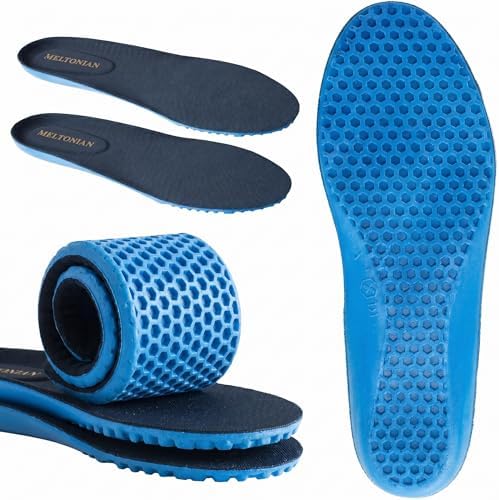
The Meltonian Player is a contoured polyurethane foam insole aimed at cushioning and everyday support. Its listed foam thickness is 5 mm at the toe and 7.5 mm at the heel. That gives you a plush replacement footbed without the rigid plate construction of the MARRDO or the court-focused outer support of the GED.
Its full-length arch contour follows the shape of the foot, and the honeycomb underside is designed to grip the shoe interior and reduce shifting. A polyester top cover and ventilated construction are intended to help manage moisture and heat. The insole is trimmable, with printed size guide lines for shaping it to your shoe.
These features make it a versatile option for walking, work, and general wear, but the supplied description does not highlight tennis-specific lateral support. If you make aggressive cuts or need a planted feeling at the outer forefoot, the GED is more directly targeted to that need. The contoured arch may also feel different from a flat factory insole, so introduce it gradually.
Pros:
- Contoured PU foam provides cushioning and arch shape
- Honeycomb underside is designed to limit in-shoe movement
- Moisture-wicking top cover and ventilated construction
- Trimmable for a customized fit
Cons:
- Not specifically designed for lateral court movements
- Contoured arch may not suit players who prefer a flatter footbed
Verdict: Choose the Meltonian Player for versatile foam cushioning and a contoured fit, rather than specialized tennis stability.
How to Choose Insoles for Heavy Tennis Players
Match the support to your movement
Tennis involves quick lateral steps, abrupt stops, and repeated push-offs. If your main concern is feeling unstable as you move side to side, look for a design that specifically mentions lateral support or reinforced outer edges. If you mainly want a softer landing, a gel or foam option may be a better fit. More cushioning does not automatically mean more stability.
Consider arch shape and footbed feel
Arch support should feel supportive, not sharp or uncomfortable. The options here range from the GED’s mid-to-high arch support to the Meltonian’s contoured arch, while the Goofort description does not state a specific arch height. If you usually wear a flatter insole, a highly contoured shape may take time to get used to. Stop using an insert that causes new or worsening discomfort.
Think about cushioning versus rigidity
Gel and PU foam are designed to cushion, while a carbon fiber plate creates a firmer, more rigid platform. A heavier player may value cushioning during repeated impacts, but a soft insole may not provide the structured feel they want during cuts. Choose based on the sensation and support you need, not simply on the material name.
Check shoe volume and fit
An insole takes up space inside your tennis shoe. If the new footbed is thicker or more contoured than the original, your toes may feel crowded or the shoe may feel too tight across the top. Remove the factory insole when the product is intended as a replacement, and check the manufacturer’s sizing and trimming instructions. Trim carefully; an insert that bunches or shifts can distract you during play.
Break in a new insole gradually
Start with a shorter, lower-intensity session rather than wearing a new insole for a long match right away. This gives you a chance to notice pressure points, slipping, or changes in how your shoe fits. The GED description specifically notes that a short break-in is normal. If discomfort continues, reassess the fit and support rather than trying to push through it.
Do not treat an insole as medical care
An insole may change comfort and underfoot support, but it cannot diagnose or treat a foot problem. If you have persistent pain, a recent injury, or a medical condition affecting your feet, ask a qualified health professional for advice before relying on an over-the-counter insert.
Frequently Asked Questions
Which insole is the most tennis-specific?
The GED Court Sports Insoles are the most directly focused on tennis. Their description highlights lateral movement, outer forefoot support, and mid-to-high arch support for quick changes of direction.
Are softer insoles always better for heavier players?
No. Softer cushioning may feel more comfortable for some players, but softness alone does not provide lateral stability. Consider whether you need impact cushioning, a more structured feel, or a balance of both.
Can I use a general-purpose insole for tennis?
You can consider a general-purpose insole if it fits your shoe and feels comfortable during movement. The Goofort and Meltonian options are broader comfort designs, while the GED is more specifically intended for court movement.
Will these insoles fit every tennis shoe?
Fit depends on the shoe’s shape, size, and available space. Some of these insoles are trimmable, but you should check each product’s size guidance and make sure the insert lies flat without crowding your toes.
Should I remove my tennis shoe’s original insole?
The GED description instructs you to remove the original insole before fitting its replacement. For the other products, follow the specific instructions on the product listing and avoid stacking inserts unless the maker says to do so.
Is a carbon fiber insole a good choice for every tennis player?
No. The MARRDO’s full-length plate is intended to provide a rigid structure, which some players may prefer and others may find too stiff. Choose it only if that firmer feel matches your needs and fits comfortably in your shoe.
When should I ask a professional about foot pain?
Seek advice from a qualified health professional if pain is persistent, getting worse, or linked to an injury or diagnosed condition. An insole is not a substitute for an evaluation or personalized treatment advice.
Final Recommendation
For most heavy tennis players looking for court-focused support, the GED Court Sports Insoles are the strongest match in this group because their design addresses lateral movement and push-offs. Choose the Goofort for general gel cushioning, the MARRDO for a rigid plate-style feel, or the Meltonian for contoured foam comfort across tennis and everyday use. Whichever you select, confirm the size, arch fit, and room in your shoe before playing a full match.